This competition is now closed.
Terms and Conditions
Only one entry will be accepted per person.
Entrants must be UK residents and aged 18 or over.
The judge's decision is final and no correspondence will be entered into.
Saturday, 1 September 2012
Sunday, 19 August 2012
The Imposter review
The Imposter (15, 98 mins)
Director: Bart Layton
★ ★ ★ ★ ☆
British filmmaker Bart Layton has managed to out-Herzog Herzog with this striking documentary account of the case of a missing boy, a vulnerable family and a brazen fraudster.
In 1994, 13 year old Nicholas Barclay disappeared from his Texas home town. Three years later in Spain, tourists came across a boy who seemingly had no identity but who, as we learn very early on, was actually a 23 year old Frenchman named Frederic Bourdin.
Through resourcefulness, acting ability and a mountain of lies, Bourdin somehow convinced first the authorities, including child protection agencies and the FBI, and then the family that he was in fact Nicholas.
He returned to Texas to live with them, and through newly filmed interviews with Bourdin and Nicholas’ family, who even now speak in the context that what transpired was real, the story develops into a heartbreaking insight into what loss and grief can do to people looking for answers.
What’s most significant is their utter willingness to accept the boy as Nicholas, even though physically he’s completely different and speaks with a French accent. Whether this is delusion or something else, something more sinister, is only one of many questions raised.
Bourdin all the while remains a slippery yet fascinating character at the centre of it, a fantasist, possibly a sociopath, who is up front about what he’s done and well aware of it. He’s a complex guy, who back in 1997 played the role and played the odds by doing things like talking as little as possible so as not to be found out. The fact that he’s still able to elicit mixed feelings, and even occasional empathy in the viewer, is a testament to how good an actor he is.
But it’s the skill and good taste with which The Imposter is structured and assembled that really marks it as the remarkable and gripping tale it is, its mystery and cinematic elements giving it a freshness and thrust not found in many docs.
In truth there does come a point, perhaps around the halfway mark, that it seems as though the story has played out, and familiarity and repetition threatens to set in. But then just when you think it has exhausted its potential, it takes a turn into a whole new territory, introducing a private investigator and all manner of developments that cast fresh light on everyone involved.
Aided by atmospheric dramatic reconstructions, it evolves into a mesmerising thriller, increasing the pace and the intrigue as suspicions are raised about certain things. And where it’s all going to go is a question even this terrific film can’t answer.
Director: Bart Layton
★ ★ ★ ★ ☆
British filmmaker Bart Layton has managed to out-Herzog Herzog with this striking documentary account of the case of a missing boy, a vulnerable family and a brazen fraudster.
In 1994, 13 year old Nicholas Barclay disappeared from his Texas home town. Three years later in Spain, tourists came across a boy who seemingly had no identity but who, as we learn very early on, was actually a 23 year old Frenchman named Frederic Bourdin.
Through resourcefulness, acting ability and a mountain of lies, Bourdin somehow convinced first the authorities, including child protection agencies and the FBI, and then the family that he was in fact Nicholas.He returned to Texas to live with them, and through newly filmed interviews with Bourdin and Nicholas’ family, who even now speak in the context that what transpired was real, the story develops into a heartbreaking insight into what loss and grief can do to people looking for answers.
What’s most significant is their utter willingness to accept the boy as Nicholas, even though physically he’s completely different and speaks with a French accent. Whether this is delusion or something else, something more sinister, is only one of many questions raised.
Bourdin all the while remains a slippery yet fascinating character at the centre of it, a fantasist, possibly a sociopath, who is up front about what he’s done and well aware of it. He’s a complex guy, who back in 1997 played the role and played the odds by doing things like talking as little as possible so as not to be found out. The fact that he’s still able to elicit mixed feelings, and even occasional empathy in the viewer, is a testament to how good an actor he is.
But it’s the skill and good taste with which The Imposter is structured and assembled that really marks it as the remarkable and gripping tale it is, its mystery and cinematic elements giving it a freshness and thrust not found in many docs.
In truth there does come a point, perhaps around the halfway mark, that it seems as though the story has played out, and familiarity and repetition threatens to set in. But then just when you think it has exhausted its potential, it takes a turn into a whole new territory, introducing a private investigator and all manner of developments that cast fresh light on everyone involved.
Aided by atmospheric dramatic reconstructions, it evolves into a mesmerising thriller, increasing the pace and the intrigue as suspicions are raised about certain things. And where it’s all going to go is a question even this terrific film can’t answer.
Tuesday, 14 August 2012
The Expendables 2 review
The Expendables 2 (15/R, 102 mins)
Director: Simon West
★ ★ ★ ☆ ☆
The proposed joy of mindless action-fest The Expendables from a couple of years ago was its bringing together of a marquee list of action legends old and new, from Sylvester Stallone and Dolph Lungdren, to Jet Li and Jason Statham.
And yet it didn’t quite deliver on that promise, since it was never quite as silly as it needed to be and, since pretty much all of them made it to the end, they weren’t even that expendable.
Everyone is back (although some barely), plus a couple of new faces for this second go around, which begins with a rescue. The identity of who they're rescuing is cute, one of a lot of nice winking touches that make this a bit of silly fun for an audience in the mood rather than one looking for great cinema. This involves wholesale massacre of an entire encampment of goons, and sets the scene for an astronomical body count to come.
Their mission proper comes when the shady Church (Bruce Willis), who reckons Stallone owes him for a previous transgression, gives him a job to pay the debt which involves retrieving the contents of a safe.
But the contents are stolen by Jean-Claude Van Damme, who’s actually fairly decent value as a bad guy, leaving the Expendable team to slaughter their way through Albania, in what appears to be WWII judging by the sets and costumes, to find their way to Van Damme.
It all makes for a shameless 80s throwback where the object of the exercise is to blow things up often enough and loudly enough that no one notices the otherwise crippling flaws and gaping plot holes.
It’s spectacularly bloody, and delivers exactly what you might expect, no more, no less, and on those terms it almost succeeds, though it’s put together with no great precision or imagination. For all its ensemble appearance, it’s still largely the Stallone and Statham show. Li disappears completely after the opening salvo, and Arnold Schwarzenegger and Willis don’t exactly figure highly, though there is much more of them than there was first time around.
Banter-wise, it’s a dead zone, which might not matter so much if there wasn’t so dang much of it. But it’s so ridiculously cheesy that still there are lines or the appearance of an iconic face to make you smile, even if more often than not you’re laughing at it and not with it.
Director: Simon West
★ ★ ★ ☆ ☆
The proposed joy of mindless action-fest The Expendables from a couple of years ago was its bringing together of a marquee list of action legends old and new, from Sylvester Stallone and Dolph Lungdren, to Jet Li and Jason Statham.
And yet it didn’t quite deliver on that promise, since it was never quite as silly as it needed to be and, since pretty much all of them made it to the end, they weren’t even that expendable.
Everyone is back (although some barely), plus a couple of new faces for this second go around, which begins with a rescue. The identity of who they're rescuing is cute, one of a lot of nice winking touches that make this a bit of silly fun for an audience in the mood rather than one looking for great cinema. This involves wholesale massacre of an entire encampment of goons, and sets the scene for an astronomical body count to come.
Their mission proper comes when the shady Church (Bruce Willis), who reckons Stallone owes him for a previous transgression, gives him a job to pay the debt which involves retrieving the contents of a safe.
But the contents are stolen by Jean-Claude Van Damme, who’s actually fairly decent value as a bad guy, leaving the Expendable team to slaughter their way through Albania, in what appears to be WWII judging by the sets and costumes, to find their way to Van Damme.
It all makes for a shameless 80s throwback where the object of the exercise is to blow things up often enough and loudly enough that no one notices the otherwise crippling flaws and gaping plot holes.
It’s spectacularly bloody, and delivers exactly what you might expect, no more, no less, and on those terms it almost succeeds, though it’s put together with no great precision or imagination. For all its ensemble appearance, it’s still largely the Stallone and Statham show. Li disappears completely after the opening salvo, and Arnold Schwarzenegger and Willis don’t exactly figure highly, though there is much more of them than there was first time around.
Banter-wise, it’s a dead zone, which might not matter so much if there wasn’t so dang much of it. But it’s so ridiculously cheesy that still there are lines or the appearance of an iconic face to make you smile, even if more often than not you’re laughing at it and not with it.
Wednesday, 8 August 2012
The Bourne Legacy review
The Bourne Legacy (12A/PG-13, 135 mins)
Director: Tony Gilroy
★ ★ ★ ☆ ☆
Reboot fever strikes once again, extending a franchise its owners obviously think has plenty life left in it, even if its star has other ideas.
Matt Damon’s departure from the spy series could have signalled its end, but in a rare move for a reboot, not only is its star replaced, but the main character.
Signs going in are encouraging enough, with a new star in Jeremy Renner who has shown twice in the past few months that he’s perfectly at home in an ongoing action franchise. And as we saw in The Bourne Identity, when it came to super-assassins, there was never just one, so the series has been primed from the start for spinoffs and continuations, even if unintentionally.
The Bourne Legacy begins as Identity did, and as Ultimatum ended, with a body floating in the water. But this is no corpse, it’s Renner’s Aaron Cross, on a training mission in Alaska fuelled by pills and injections.
Wisely it’s not a slave to formula, and Cross is not just another amnesiac. So we’re introduced to Rachel Weisz’s scientist as a way in to a government-backed conspiracy run by Ed Norton that’s been producing pharmaceutically enhanced soldiers, of which Cross is one.
The spectre of Jason Bourne still looms large over this, with the story actually taking place concurrently with The Bourne Ultimatum, for reasons that at first look like they might be quite interesting, but which turn out to be fairly spurious.
Norton has been looking into the CIA programmes that spawned Jason Bourne, Treadstone and Black Briar, which it would seem are only a small part of parallel programmes at risk if the Bourne situation explodes, leading Norton to shut it down, but not reckoning on Cross surviving.
Director Tony Gilroy comes on board to replace Paul Greengrass, who many credited for much of what was good about Supremacy and Ultimatum. Yet Gilroy has form, as writer of the original trilogy, and as director of Michael Clayton. And looking at the results here, Clayton is the film it resembles more than most, a talky yet largely compelling affair that forgoes action for intrigue, with a lot of science thrown around without pause for breath or explanation.
Every effort is made, sometimes too much effort, to shoehorn this into the Bourne universe, and it would certainly help to have some familiarity with the previous movies to have any hope of keeping up with a labyrinthine plot.
So it’s sure not dumb, its crisp, high-level dialogue driving several lengthy dramatic scenes. And yet the first proper action is a long time coming, with plenty downtime until the next sequence making this, whisper it, occasionally a trifle dull.
The bursts of hand to hand combat are as rapid and brutal as ever, but they're thin on the ground. Renner’s Cross is composed and wry, much more talkative than Bourne ever was, and when he’s able to use his skills and training to get out of impossible situations, the film certainly comes alive.
But the main vehicle action sequence, a frenzied motorbike chase through the streets of Manila, is more chaotic than precise; more edited together than envisioned with the skill of Greengrass, and with a disappointing recourse to CGI.
So if you're expecting more of the same, you’re not going to get it, though that’s not necessarily a bad thing. Even if it often tries hard not to be, The Bourne Legacy is very much its own beast, a conspiracy drama that’s fine on those terms, but which suffers in comparison with its forebears.
Director: Tony Gilroy
★ ★ ★ ☆ ☆
Reboot fever strikes once again, extending a franchise its owners obviously think has plenty life left in it, even if its star has other ideas.
Matt Damon’s departure from the spy series could have signalled its end, but in a rare move for a reboot, not only is its star replaced, but the main character.Signs going in are encouraging enough, with a new star in Jeremy Renner who has shown twice in the past few months that he’s perfectly at home in an ongoing action franchise. And as we saw in The Bourne Identity, when it came to super-assassins, there was never just one, so the series has been primed from the start for spinoffs and continuations, even if unintentionally.
The Bourne Legacy begins as Identity did, and as Ultimatum ended, with a body floating in the water. But this is no corpse, it’s Renner’s Aaron Cross, on a training mission in Alaska fuelled by pills and injections.
Wisely it’s not a slave to formula, and Cross is not just another amnesiac. So we’re introduced to Rachel Weisz’s scientist as a way in to a government-backed conspiracy run by Ed Norton that’s been producing pharmaceutically enhanced soldiers, of which Cross is one.
The spectre of Jason Bourne still looms large over this, with the story actually taking place concurrently with The Bourne Ultimatum, for reasons that at first look like they might be quite interesting, but which turn out to be fairly spurious.
Norton has been looking into the CIA programmes that spawned Jason Bourne, Treadstone and Black Briar, which it would seem are only a small part of parallel programmes at risk if the Bourne situation explodes, leading Norton to shut it down, but not reckoning on Cross surviving.Director Tony Gilroy comes on board to replace Paul Greengrass, who many credited for much of what was good about Supremacy and Ultimatum. Yet Gilroy has form, as writer of the original trilogy, and as director of Michael Clayton. And looking at the results here, Clayton is the film it resembles more than most, a talky yet largely compelling affair that forgoes action for intrigue, with a lot of science thrown around without pause for breath or explanation.
Every effort is made, sometimes too much effort, to shoehorn this into the Bourne universe, and it would certainly help to have some familiarity with the previous movies to have any hope of keeping up with a labyrinthine plot.
So it’s sure not dumb, its crisp, high-level dialogue driving several lengthy dramatic scenes. And yet the first proper action is a long time coming, with plenty downtime until the next sequence making this, whisper it, occasionally a trifle dull.
The bursts of hand to hand combat are as rapid and brutal as ever, but they're thin on the ground. Renner’s Cross is composed and wry, much more talkative than Bourne ever was, and when he’s able to use his skills and training to get out of impossible situations, the film certainly comes alive.
But the main vehicle action sequence, a frenzied motorbike chase through the streets of Manila, is more chaotic than precise; more edited together than envisioned with the skill of Greengrass, and with a disappointing recourse to CGI.
So if you're expecting more of the same, you’re not going to get it, though that’s not necessarily a bad thing. Even if it often tries hard not to be, The Bourne Legacy is very much its own beast, a conspiracy drama that’s fine on those terms, but which suffers in comparison with its forebears.
Labels:
Action,
Bourne,
Edward Norton,
Jeremy Renner,
Matt Damon,
Rachel Weisz
Monday, 6 August 2012
Tickets to be Won
This competition is now closed
Terms and Conditions
Only one entry will be accepted per person.
Entrants must be UK residents and aged 18 or over.
The judge's decision is final and no correspondence will be entered into.
Terms and Conditions
Only one entry will be accepted per person.
Entrants must be UK residents and aged 18 or over.
The judge's decision is final and no correspondence will be entered into.
Sunday, 29 July 2012
Searching for Sugar Man review
Searching for Sugar Man (12A/PG-13, 86 mins)
Director: Malik Bendjelloul
This glorious music documentary begins in South Africa, where a record store owner called Sugar tells us about an album that was released there 40 years earlier by a little known American singer called Rodriguez.
We hear how he committed suicide by setting himself on fire on stage, so we head back to the late 60s and Rodriguez’s home city of Detroit to try to learn something of his story, of beautifully recreated smoky clubs, where he would sit with his back to the audience, his mystique and enigma building with each passing moment.
Rodriguez’s original recordings are used sparingly and often fittingly for what we’re seeing on screen, as the grimy streets of Detroit glide by. Though sometimes dangerously close to Dylan parody, the songs are mostly tuneful slices of troubadour folk and occasional pop, not a million miles from Cat Stevens.
As we hear from the producer who made his first album and others who worked with him, what comes through is the regret and astonishment that his music failed to find an audience. Yet people went wild for Rodriguez in South Africa, so we return there to pick up the story.
Amazingly, and completely unknown to anyone in the States, he had become a rebel icon, a figurehead for South African musicians singing out against apartheid in any way they could, which led to his songs being banned by the authorities.
But even with such a huge fan following, no one knew the first thing about Rodriguez, which adds an extra layer of intrigue. Even the suicide story is disputed, with some saying he shot himself on stage, others that he died of an overdose.
But with half a million record sales in South Africa, where did the money go? A former boss of Motown provides a tremendously prickly response to that question, as a South African “music detective” digs deeper and deeper into the mystery.
It would be unfair to reveal any more of where the story of Rodriguez goes from here, because this is a documentary that’s able to provide astonishing twists in the tale that would grace any thriller, as it builds up a portrait of a remarkable man.
Director Malik Bendjelloul has a great storyteller’s knack for getting information across at the perfect time for maximum impact, which means there are several moments when Searching for Sugar Man soars, achieving emotional peaks and troughs that are rare in documentary filmmaking or indeed any film. The result is a joyous triumph that’s instantly one of the year’s best docs.
Director: Malik Bendjelloul
★ ★ ★ ★ ☆
This glorious music documentary begins in South Africa, where a record store owner called Sugar tells us about an album that was released there 40 years earlier by a little known American singer called Rodriguez.
We hear how he committed suicide by setting himself on fire on stage, so we head back to the late 60s and Rodriguez’s home city of Detroit to try to learn something of his story, of beautifully recreated smoky clubs, where he would sit with his back to the audience, his mystique and enigma building with each passing moment.
Rodriguez’s original recordings are used sparingly and often fittingly for what we’re seeing on screen, as the grimy streets of Detroit glide by. Though sometimes dangerously close to Dylan parody, the songs are mostly tuneful slices of troubadour folk and occasional pop, not a million miles from Cat Stevens.
As we hear from the producer who made his first album and others who worked with him, what comes through is the regret and astonishment that his music failed to find an audience. Yet people went wild for Rodriguez in South Africa, so we return there to pick up the story.
Amazingly, and completely unknown to anyone in the States, he had become a rebel icon, a figurehead for South African musicians singing out against apartheid in any way they could, which led to his songs being banned by the authorities.
But even with such a huge fan following, no one knew the first thing about Rodriguez, which adds an extra layer of intrigue. Even the suicide story is disputed, with some saying he shot himself on stage, others that he died of an overdose.
But with half a million record sales in South Africa, where did the money go? A former boss of Motown provides a tremendously prickly response to that question, as a South African “music detective” digs deeper and deeper into the mystery.
It would be unfair to reveal any more of where the story of Rodriguez goes from here, because this is a documentary that’s able to provide astonishing twists in the tale that would grace any thriller, as it builds up a portrait of a remarkable man.
Director Malik Bendjelloul has a great storyteller’s knack for getting information across at the perfect time for maximum impact, which means there are several moments when Searching for Sugar Man soars, achieving emotional peaks and troughs that are rare in documentary filmmaking or indeed any film. The result is a joyous triumph that’s instantly one of the year’s best docs.
Labels:
Documentary,
Musician
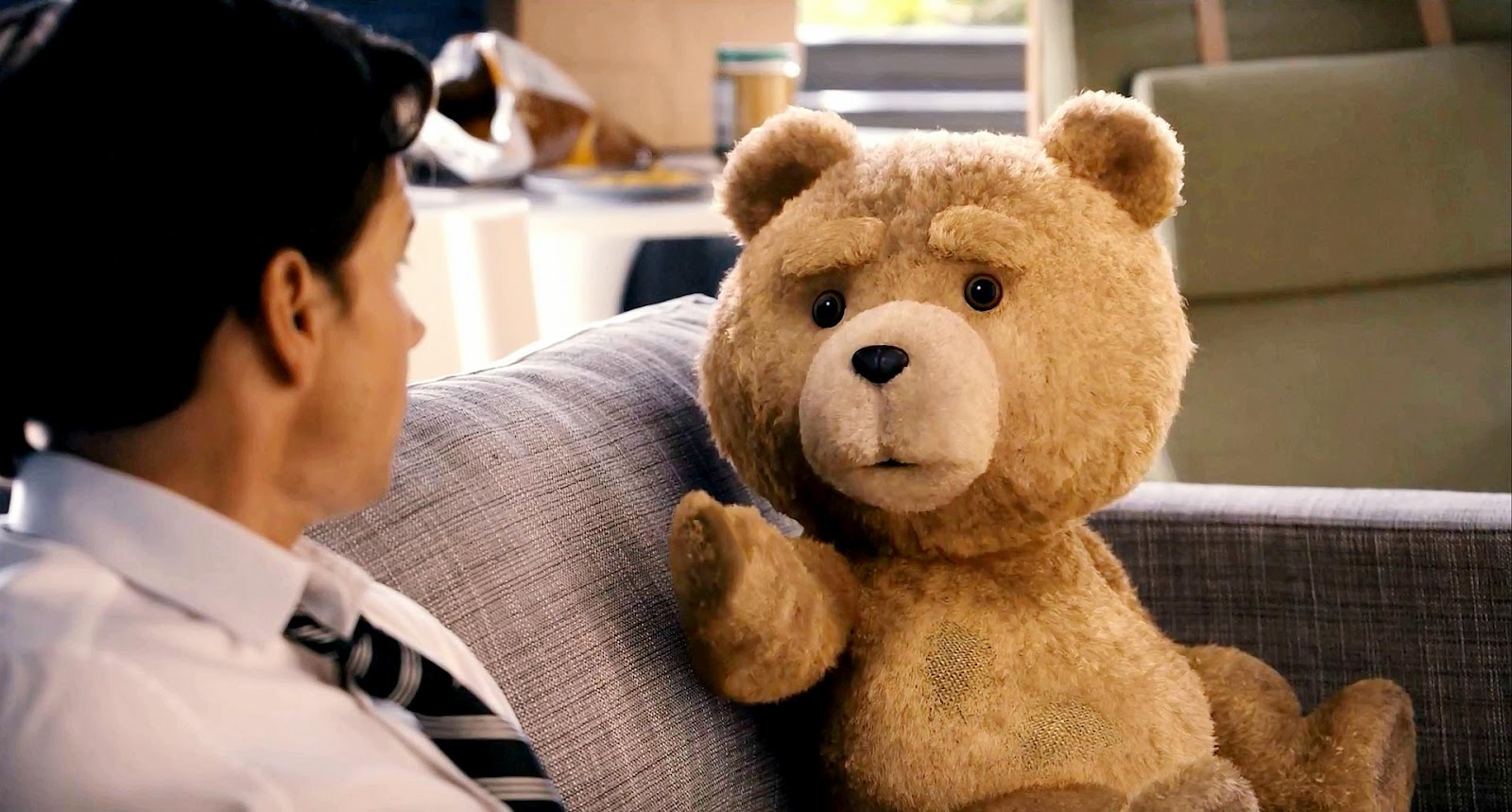
Ted review
Ted (15/R, 106 mins)
Director: Seth MacFarlane
★ ★ ★ ☆ ☆
Seth MacFarlane, creator of Family Guy, makes his feature writing and directing debut with this high-concept fantasy comedy that shares several cast members and jokes with his monumentally bad-taste TV animation. MacFarlane also voices the eponymous Ted, a teddy that comes to life after young John gets it as a Christmas present in the 80s. Now a grown man, John (Mark Wahlberg) still lives with Ted, and he’s been seeing Lori (Mila Kunis) for four years. But she worries Ted is preventing John from making a commitment with her, and that perhaps it’s time he moved out. Though the structure is essentially that of a rom-com, it’s the same premise and the same joke as Simon Pegg and Nick Frost’s Paul from a couple of years ago, with a swearing, pot-smoking teddy bear replacing a swearing, pot-smoking alien. And like that film, it’s a moderately amusing one that doesn’t really know how to exploit the laughs beyond its central conceit. Like Paul, it relies largely on crudity and the sheer incongruence of its title character and, like Paul, there are fewer laughs than you might reasonably expect. It’s a case of throwing everything at the screen joke-wise in the hope that something sticks, with an OK number of guffaws among the ill-disciplined shenanigans. But it’s enlivened by some terrific cameos and is still a reasonably enjoyable movie experience, especially if you’re on the humour’s wavelength.
Director: Seth MacFarlane
★ ★ ★ ☆ ☆
Seth MacFarlane, creator of Family Guy, makes his feature writing and directing debut with this high-concept fantasy comedy that shares several cast members and jokes with his monumentally bad-taste TV animation. MacFarlane also voices the eponymous Ted, a teddy that comes to life after young John gets it as a Christmas present in the 80s. Now a grown man, John (Mark Wahlberg) still lives with Ted, and he’s been seeing Lori (Mila Kunis) for four years. But she worries Ted is preventing John from making a commitment with her, and that perhaps it’s time he moved out. Though the structure is essentially that of a rom-com, it’s the same premise and the same joke as Simon Pegg and Nick Frost’s Paul from a couple of years ago, with a swearing, pot-smoking teddy bear replacing a swearing, pot-smoking alien. And like that film, it’s a moderately amusing one that doesn’t really know how to exploit the laughs beyond its central conceit. Like Paul, it relies largely on crudity and the sheer incongruence of its title character and, like Paul, there are fewer laughs than you might reasonably expect. It’s a case of throwing everything at the screen joke-wise in the hope that something sticks, with an OK number of guffaws among the ill-disciplined shenanigans. But it’s enlivened by some terrific cameos and is still a reasonably enjoyable movie experience, especially if you’re on the humour’s wavelength.
Labels:
Comedy,
Family Guy,
Mark Wahlberg,
Mila Kunis,
Nick Frost,
Paul,
Seth MacFarlane,
Simon Pegg
Brave review
Brave (PG, 100 mins)
Director: Mark Andrews
★ ★ ★ ★ ☆
Pixar’s 13th feature, a magical Scotland-set adventure that represents their first fairytale, is a triumphant return to form for the animation studio following the uncharacteristically poor Cars 2.
Though it’s the first Pixar film with a female lead, Brave develops along the lines that many a Disney princess fable does, where an independently minded character who yearns for something more in their life gets more than they bargained for in a be-careful-what-you-wish-for sort of way.
That lead is Merida (voiced by Kelly Macdonald), a flame-haired princess who is a bit fed up with the expectations placed upon her by her parents; the king (Billy Connolly), who years before lost his leg to a savage bear that still supposedly roams the land, and queen (Emma Thompson), who wants Merida to comport herself in a more princess-ly way.
She’d much rather be a warrior but instead finds herself betrothed, with a clan gathering organised to find her a suitable husband, the clan chiefs presenting their buffoons of sons to win Merida’s hand, much to her annoyance.
Distancing herself from the goings-on, Merida stumbles across a witch from whom she gets a potion designed to change her fate. This leads to a major plot point around the halfway mark that is better left unspoiled, but let’s just say that fates are indeed changed.
What follows is a film about communication between parents and children, and listening to each other’s point of view, even as it deepens into a stirring mythology. Visually it’s an indisputable masterpiece, with every facial nuance and blade of grass and patch of heather alive with the shimmer that $200m worth of computer animation provides. A glorious Patrick Doyle score and a couple of splendid songs are just gravy.
The decision to use predominantly Scottish actors for the voices is an endlessly sensible one, and we can only imagine the kind of horrors the original choice for Merida, Reece Witherspoon, may have inflicted on our ears. Luckily we don’t have to, since the perfectly cast Macdonald combines spirit and warmth to create one of Pixar’s most memorable human characters.
Connolly is a delight, as are the trio of clan chiefs, voiced by Robbie Coltrane, Craig Ferguson and the especially good Kevin McKidd, who also gets to add his Doric tones to his chieftan’s near unintelligible son. Even the non-Scots like Thompson and Julie Walters as the witch with a big part to play in the plot get it just right.
In particular, it’s the sense of Scottish-ness that Pixar absolutely nails, from the visual majesty to the smallest vocal intonations. You couldn’t call it realistic exactly, since it’s a medieval fantasy, but still it’s one of the most authentic Hollywood portrayals of Scotland you’re likely to see, deftly sidestepping the pitfalls of going all Brigadoon on us.
If a criticism is to be levelled, it’s that perhaps it’s a bit thin and one-note when it comes to the plot, that perhaps it resolves a bit easily, neglecting the depth of theme and character that graces the very best of Pixar.
But the flipside of that is that it chugs along at a lick, with little to no flab and a single mindedness of purpose that suitably reflects Merida’s character, with Pixar once again showing that when it comes to animation, even though they're not perfect, they're still the best in the business.
Director: Mark Andrews
★ ★ ★ ★ ☆
Pixar’s 13th feature, a magical Scotland-set adventure that represents their first fairytale, is a triumphant return to form for the animation studio following the uncharacteristically poor Cars 2.
Though it’s the first Pixar film with a female lead, Brave develops along the lines that many a Disney princess fable does, where an independently minded character who yearns for something more in their life gets more than they bargained for in a be-careful-what-you-wish-for sort of way.
That lead is Merida (voiced by Kelly Macdonald), a flame-haired princess who is a bit fed up with the expectations placed upon her by her parents; the king (Billy Connolly), who years before lost his leg to a savage bear that still supposedly roams the land, and queen (Emma Thompson), who wants Merida to comport herself in a more princess-ly way.She’d much rather be a warrior but instead finds herself betrothed, with a clan gathering organised to find her a suitable husband, the clan chiefs presenting their buffoons of sons to win Merida’s hand, much to her annoyance.
Distancing herself from the goings-on, Merida stumbles across a witch from whom she gets a potion designed to change her fate. This leads to a major plot point around the halfway mark that is better left unspoiled, but let’s just say that fates are indeed changed.
What follows is a film about communication between parents and children, and listening to each other’s point of view, even as it deepens into a stirring mythology. Visually it’s an indisputable masterpiece, with every facial nuance and blade of grass and patch of heather alive with the shimmer that $200m worth of computer animation provides. A glorious Patrick Doyle score and a couple of splendid songs are just gravy.
The decision to use predominantly Scottish actors for the voices is an endlessly sensible one, and we can only imagine the kind of horrors the original choice for Merida, Reece Witherspoon, may have inflicted on our ears. Luckily we don’t have to, since the perfectly cast Macdonald combines spirit and warmth to create one of Pixar’s most memorable human characters.
Connolly is a delight, as are the trio of clan chiefs, voiced by Robbie Coltrane, Craig Ferguson and the especially good Kevin McKidd, who also gets to add his Doric tones to his chieftan’s near unintelligible son. Even the non-Scots like Thompson and Julie Walters as the witch with a big part to play in the plot get it just right.
In particular, it’s the sense of Scottish-ness that Pixar absolutely nails, from the visual majesty to the smallest vocal intonations. You couldn’t call it realistic exactly, since it’s a medieval fantasy, but still it’s one of the most authentic Hollywood portrayals of Scotland you’re likely to see, deftly sidestepping the pitfalls of going all Brigadoon on us.
If a criticism is to be levelled, it’s that perhaps it’s a bit thin and one-note when it comes to the plot, that perhaps it resolves a bit easily, neglecting the depth of theme and character that graces the very best of Pixar.
But the flipside of that is that it chugs along at a lick, with little to no flab and a single mindedness of purpose that suitably reflects Merida’s character, with Pixar once again showing that when it comes to animation, even though they're not perfect, they're still the best in the business.
Labels:
Animation,
Billy Connolly,
CGI,
Comedy,
Disney,
Kelly Macdonald,
Kevin McKidd,
Pixar,
Robbie Coltrane,
Scotland
Diary of a Wimpy Kid: Dog Days review
Diary of a Wimpy Kid: Dog Days (PG, 94 mins)
Director: David Bowers
★ ★ ★ ☆ ☆
For the third summer running, the likeable family comedies based on the book series by Jeff Kinney get a cinematic outing. It’s the summer holidays for teenager Greg (Zachary Gordon), who’s looking forward to three months of playing video games. His dad (Steve Zahn) has more outdoorsy ideas for him though, and has also had his head turned by a fancy prep school that Greg thinks he might be sent to if he doesn’t buck up his ideas. Greg’s misadventures are good natured but starting to wear a little thin, with their episodic structure and gags that are sometimes left dangling. But there’s plenty zany slapstick that offers comparable chuckles to many grown up comedies and an ongoing streak of decency and integrity that lifts the series above a lot of kid-oriented fare. And at least there’s much more Zahn than there’s been in the past, which is always a good thing.
Director: David Bowers
★ ★ ★ ☆ ☆
For the third summer running, the likeable family comedies based on the book series by Jeff Kinney get a cinematic outing. It’s the summer holidays for teenager Greg (Zachary Gordon), who’s looking forward to three months of playing video games. His dad (Steve Zahn) has more outdoorsy ideas for him though, and has also had his head turned by a fancy prep school that Greg thinks he might be sent to if he doesn’t buck up his ideas. Greg’s misadventures are good natured but starting to wear a little thin, with their episodic structure and gags that are sometimes left dangling. But there’s plenty zany slapstick that offers comparable chuckles to many grown up comedies and an ongoing streak of decency and integrity that lifts the series above a lot of kid-oriented fare. And at least there’s much more Zahn than there’s been in the past, which is always a good thing.
Labels:
Comedy,
Diary of a Wimpy Kid,
Family,
Steve Zahn
Blu-ray Prizes to be won
This competition is now closed
Terms and Conditions
Only one entry will be accepted per person.
Entrants must be UK residents and aged 18 or over.
The judge's decision is final and no correspondence will be entered into.
Terms and Conditions
Only one entry will be accepted per person.
Entrants must be UK residents and aged 18 or over.
The judge's decision is final and no correspondence will be entered into.
Subscribe to:
Posts (Atom)