San Andreas (12A/PG-13, 114 mins)
Director: Brad Peyton
★ ★ ★ ☆ ☆
A disaster movie of the old school, albeit one with lavish amounts of modern technology at its disposal, San Andreas is an enjoyably silly action ride that benefits from lowered expectations and no pretensions of being anything other than fun.
Dwayne Johnson, fresh from revitalising the Fast and Furious franchise, now has to save the whole of California when the San Andreas fault-line decides now is its time to fall into the Pacific, causing an enormous earthquake that wrecks most of the state. Or more specifically he has to save his daughter (Alexandra Daddario) who is trapped in San Francisco while he and his estranged wife (Carla Gugino) are in Los Angeles. Johnson is a helicopter rescue pilot who, for reasons not explored, isn’t required to actually rescue anyone during the earthquake but instead makes the trip up the coast for his family, delivering well-timed quips along the way.
The blueprint is a familiar one, opening with a rescue scene, followed by some sciencey stuff (Paul Giamatti is the seismologist who sees the quake coming), followed by character intros and family stuff and dealings in personal problems that don’t really belong. It’s all filled with honking dialogue that no one would ever say, but really all you're looking for from this kind of thing is pleasing spectacle and some people to care about.
So the Hoover Dam disintegrates, the whole of downtown Los Angeles ripples like a rug and the Golden Gate Bridge gets washed away in scenes that are often properly harrowing. It’s one of those movies where thousands of people are dying off screen, but we deal with only a handful, which is pretty much how it needs to be for focus.
The well spaced out tremors and sequences of peril build in intensity to some quite astonishing levels of devastation once the city starts collapsing, and the CGI is at times miraculous. We’re not here for anything else, and in terms of terror and chaos, this cheesy adventure really hits the spot and is every bit as good and as bad as it needs to be.
Showing posts with label CGI. Show all posts
Thursday, 28 May 2015
San Andreas review
Labels:
Action,
Adventure,
CGI,
Dwayne Johnson
Wednesday, 17 December 2014
Night at the Museum: Secret of the Tomb review
Night at the Museum: Secret of the Tomb (PG, 98 mins)
Director: Shawn Levy
★ ★ ★ ☆ ☆
Talk about stretching an idea so thin you can start to see through it. The premise of the first Night at the Museum movie eight years ago was that a magical tablet could bring the exhibits of a New York museum to life at night, which was realised through what at the time were fairly nifty computer generated effects.
Ben Stiller was Larry, the night security guard at the museum who got caught up in the middle of the mayhem when dinosaur skeletons and Attila the Hun starting running amok. Now Larry is in charge of putting on a show for dignitaries, who think the animated exhibits are special effects.
Before we get to that there’s a prologue set in 1930s Egypt that gives us a bit of half-hearted background on the tablet, as some Indiana Jones-style tomb raiders disturb it amid the standard warnings of a curse.
For reasons never explained this curse involved absolutely nothing happening for nearly 80 years, but now the tablet is corroding and the exhibits are going screwy. The solution, invented by the film’s writers for no reason other than it would be nice to go to London, is that they must go to the British Museum to try to free the curse.
Or something. Because none of it follows a remotely logical or coherent path, and there’s really very little to it in terms of threat or excitement. The situation is paper-thin, the jokes are lame and the special effects aren’t even particularly special. It looks pretty horrible too, the direction is lacklustre and it seems scaled down from previous instalments.
There’s the need for some uninspired padding involving Larry’s teenage son, and whether he will or won’t go to college. Another exciting subplot to look out for in the fourth film; will Larry do the dishes or leave them until the morning?
Yet for some reason it’s perfectly watchable and affable, mostly thanks to a game cast, and mostly thanks to Dan Stevens. He pops up as Sir Lancelot and has some fun with the action shenanigans while also demonstrating a nice way with comic timing as he fails to understand anything going on around him.
We also get the final acting appearance of Robin Williams, who reprises his role as Theodore Roosevelt. It’s hardly a fitting send off, with he and just about every character other than Larry and Lance given insufficient material to make any impression.
In the end this is unlikely to be remembered as one of the great trilogies. Really it barely passes muster, and in a few years there might not even be many people who remember it was a trilogy at all.
But it rattles along quickly and it’s never dull, which actually counts for something. And if it looks like it’s only scraping a third star by the skin of its teeth, which it is, that’s because it’s Christmas, and it’s because we get to see Dick Van Dyke dance.
Director: Shawn Levy
★ ★ ★ ☆ ☆
Talk about stretching an idea so thin you can start to see through it. The premise of the first Night at the Museum movie eight years ago was that a magical tablet could bring the exhibits of a New York museum to life at night, which was realised through what at the time were fairly nifty computer generated effects.
Ben Stiller was Larry, the night security guard at the museum who got caught up in the middle of the mayhem when dinosaur skeletons and Attila the Hun starting running amok. Now Larry is in charge of putting on a show for dignitaries, who think the animated exhibits are special effects.
Before we get to that there’s a prologue set in 1930s Egypt that gives us a bit of half-hearted background on the tablet, as some Indiana Jones-style tomb raiders disturb it amid the standard warnings of a curse.
For reasons never explained this curse involved absolutely nothing happening for nearly 80 years, but now the tablet is corroding and the exhibits are going screwy. The solution, invented by the film’s writers for no reason other than it would be nice to go to London, is that they must go to the British Museum to try to free the curse.
Or something. Because none of it follows a remotely logical or coherent path, and there’s really very little to it in terms of threat or excitement. The situation is paper-thin, the jokes are lame and the special effects aren’t even particularly special. It looks pretty horrible too, the direction is lacklustre and it seems scaled down from previous instalments.
There’s the need for some uninspired padding involving Larry’s teenage son, and whether he will or won’t go to college. Another exciting subplot to look out for in the fourth film; will Larry do the dishes or leave them until the morning?
Yet for some reason it’s perfectly watchable and affable, mostly thanks to a game cast, and mostly thanks to Dan Stevens. He pops up as Sir Lancelot and has some fun with the action shenanigans while also demonstrating a nice way with comic timing as he fails to understand anything going on around him.
We also get the final acting appearance of Robin Williams, who reprises his role as Theodore Roosevelt. It’s hardly a fitting send off, with he and just about every character other than Larry and Lance given insufficient material to make any impression.
In the end this is unlikely to be remembered as one of the great trilogies. Really it barely passes muster, and in a few years there might not even be many people who remember it was a trilogy at all.
But it rattles along quickly and it’s never dull, which actually counts for something. And if it looks like it’s only scraping a third star by the skin of its teeth, which it is, that’s because it’s Christmas, and it’s because we get to see Dick Van Dyke dance.
Labels:
Ben Stiller,
CGI,
Family,
Fantasy,
Ricky Gervais,
Robin Williams,
Sequel,
Steve Coogan
Tuesday, 13 May 2014
Godzilla review
Godzilla (12A/PG-13, 123 mins)
Director: Gareth Edwards
★ ★ ★ ☆ ☆
Director Gareth Edwards caused something of a splash with his no-budget sci-fi from a few years back, Monsters, albeit as much because of its cost than it actually being especially good.
The film’s reception and Edwards’ way with, well, monsters, was instrumental in landing him the gig for this mega-budget updating of a series that’s been a fixture of Japanese moviemaking for 60 years now.
A ropey Hollywood effort from 1998 was as much an excuse for director Roland Emmerich to blow up bits of New York in the style of his Independence Day as it was a remotely successful Godzilla movie, and is best quietly forgotten. But just a year on from Pacific Rim, whether audiences have the appetite for another monster mash remains to be seen.
Tonally this is very sober stuff compared to the cheesiness of the 1998 version, but it remains true to the origins of Godzilla, an allegorical product of post-Hiroshima disquiet and the thirst for nuclear testing in the 1950s.
We kick off in the Philippines in 1999 where scientists played by Ken Watanabe and Sally Hawkins discover enormous fossils underground. Meanwhile in Japan, Joe (Bryan Cranston) is an engineer at a nuclear plant which is experiencing tremors. Everyone thinks earthquake, but as Joe’s wife Sandra (Juliette Binoche) dies in the resulting meltdown, he believes something else is afoot.
Fifteen years on from this their son Ford (Aaron Taylor-Johnson) is in the navy, and has just returned to his wife (Elizabeth Olsen) and son in San Francisco. Joe is still in Japan, living like a crackpot and trying to expose the cover up and prove it wasn’t a natural disaster.
This is all part of a lengthy setup that ends up taking up more screen time than it merits because it never really pays off down the line. It’s just one of a checklist of flaws to be ticked off that explain why this is a movie with a debit column bigger than its credits. It offers a commendable centre but little momentum, but the upshot of all the preamble is the release of a pair of insect-like creatures called Muto that feed on radiation.
Like on Monsters, Edwards certainly has empathy for them, which is fine, but it does rather come at the expense of being interested in the humans. For all the effort to add poignancy and emotional depth, there are no interesting characters to speak of.
It also thoroughly wastes a very respectable cast. Watanabe and Hawkins disappear into the background after a while with nothing to do but deliver clunky exposition. Cranston just yells a lot and Olsen barely registers as a presence. We spend most of the time with Taylor-Johnson, as he and the military chase the Muto across the Pacific.
But then all that groundwork is abandoned anyway for monsters fighting, because obviously in a film called Godzilla, you need some Godzilla. The enormous dinosaur-like creature is awakened from the depths and could end up being mankind’s only hope against the Muto.
A blockbuster shouldn’t live and die by the special effects, but in many ways that’s often as much as Godzilla has going for it, alongside a number of exquisitely composed and atmospheric shots. The visuals are astonishing, whether it’s the creatures tearing down entire cities or a tsunami devastating Honolulu.
The first big sighting is just about worth the wait and the one thing Edwards certainly manages to get right are the reveals. As Godzilla or the Muto appear from out of smoke or out of the sky to maul each other or a skyscraper, he’s able to deliver a handful of truly jaw-dropping sequences. Godzilla is huge and really quite unsettling as a presence, and in one or two moments the film touches on being a proper horror, posing genuine danger from these massive Lovecraftian beasties.
And yet it’s often to be found skimping on the action, cutting out early from the scraps and only showing us the aftermath rather than the main event. As a result the first two-thirds consist of an awful lot of teasing, although it could be argued that an all-out assault would be exhausting in a Transformers sort of way.
A little lightness of touch might have worked wonders too. It’s an entirely humourless affair, which makes you question the point of having something as silly as two hours of monsters hitting each other when it doesn’t try to make you smile once.
Enjoy the thrill of the few times when Godzilla lets rip with all his might, but mayhem isn’t really enough if you're not having fun with it.
Director: Gareth Edwards
★ ★ ★ ☆ ☆
Director Gareth Edwards caused something of a splash with his no-budget sci-fi from a few years back, Monsters, albeit as much because of its cost than it actually being especially good.
The film’s reception and Edwards’ way with, well, monsters, was instrumental in landing him the gig for this mega-budget updating of a series that’s been a fixture of Japanese moviemaking for 60 years now.
A ropey Hollywood effort from 1998 was as much an excuse for director Roland Emmerich to blow up bits of New York in the style of his Independence Day as it was a remotely successful Godzilla movie, and is best quietly forgotten. But just a year on from Pacific Rim, whether audiences have the appetite for another monster mash remains to be seen.
Tonally this is very sober stuff compared to the cheesiness of the 1998 version, but it remains true to the origins of Godzilla, an allegorical product of post-Hiroshima disquiet and the thirst for nuclear testing in the 1950s.
We kick off in the Philippines in 1999 where scientists played by Ken Watanabe and Sally Hawkins discover enormous fossils underground. Meanwhile in Japan, Joe (Bryan Cranston) is an engineer at a nuclear plant which is experiencing tremors. Everyone thinks earthquake, but as Joe’s wife Sandra (Juliette Binoche) dies in the resulting meltdown, he believes something else is afoot.Fifteen years on from this their son Ford (Aaron Taylor-Johnson) is in the navy, and has just returned to his wife (Elizabeth Olsen) and son in San Francisco. Joe is still in Japan, living like a crackpot and trying to expose the cover up and prove it wasn’t a natural disaster.
This is all part of a lengthy setup that ends up taking up more screen time than it merits because it never really pays off down the line. It’s just one of a checklist of flaws to be ticked off that explain why this is a movie with a debit column bigger than its credits. It offers a commendable centre but little momentum, but the upshot of all the preamble is the release of a pair of insect-like creatures called Muto that feed on radiation.
Like on Monsters, Edwards certainly has empathy for them, which is fine, but it does rather come at the expense of being interested in the humans. For all the effort to add poignancy and emotional depth, there are no interesting characters to speak of.
It also thoroughly wastes a very respectable cast. Watanabe and Hawkins disappear into the background after a while with nothing to do but deliver clunky exposition. Cranston just yells a lot and Olsen barely registers as a presence. We spend most of the time with Taylor-Johnson, as he and the military chase the Muto across the Pacific.
But then all that groundwork is abandoned anyway for monsters fighting, because obviously in a film called Godzilla, you need some Godzilla. The enormous dinosaur-like creature is awakened from the depths and could end up being mankind’s only hope against the Muto.
A blockbuster shouldn’t live and die by the special effects, but in many ways that’s often as much as Godzilla has going for it, alongside a number of exquisitely composed and atmospheric shots. The visuals are astonishing, whether it’s the creatures tearing down entire cities or a tsunami devastating Honolulu.
The first big sighting is just about worth the wait and the one thing Edwards certainly manages to get right are the reveals. As Godzilla or the Muto appear from out of smoke or out of the sky to maul each other or a skyscraper, he’s able to deliver a handful of truly jaw-dropping sequences. Godzilla is huge and really quite unsettling as a presence, and in one or two moments the film touches on being a proper horror, posing genuine danger from these massive Lovecraftian beasties.
And yet it’s often to be found skimping on the action, cutting out early from the scraps and only showing us the aftermath rather than the main event. As a result the first two-thirds consist of an awful lot of teasing, although it could be argued that an all-out assault would be exhausting in a Transformers sort of way.
A little lightness of touch might have worked wonders too. It’s an entirely humourless affair, which makes you question the point of having something as silly as two hours of monsters hitting each other when it doesn’t try to make you smile once.
Enjoy the thrill of the few times when Godzilla lets rip with all his might, but mayhem isn’t really enough if you're not having fun with it.
Labels:
Aaron Taylor-Johnson,
Action,
Blockbuster,
Bryan Cranston,
CGI,
Godzilla,
Japan,
Monsters,
Remake,
Sci-Fi
Monday, 3 March 2014
300: Rise of an Empire review
300: Rise of an Empire (15/R, 102 mins)
Director: Noam Murro
★ ★ ☆ ☆ ☆
The reams of backstory and exposition that make up much of this somewhat uncalled-for action sequel fill us in on how Greek general Themistocles (Sullivan Stapleton) made an enemy of Xerxes, who became the god-king that Gerard Butler and his Spartans fought in the original 300 seven years ago. None of this is particularly relevant to what’s being told here, a battle being waged by Xerxes’ second-in-command, Artemisia (Eva Green), and her massed Persian forces, with Themistocles wanting Sparta to join the fight. What follows is essentially the same sea battle played out over and over, doused in torrents of computer generated blood that passed muster back when this sort of thing was a novelty, but which is now just kinda boring. Grand-scale carnage and destruction it may be, but there’s very little to engage with thanks to woeful dialogue and scarcely more believable performances. A couple of stunning shots offer little respite, and it’s rather cheapened by the fact it’s all taking place at more or less the same time as the events of 300, meaning we’re watching this third division stuff while the Champions League is on. It seemed these words would never be written, but Gerard Butler is badly missed.
Director: Noam Murro
★ ★ ☆ ☆ ☆
The reams of backstory and exposition that make up much of this somewhat uncalled-for action sequel fill us in on how Greek general Themistocles (Sullivan Stapleton) made an enemy of Xerxes, who became the god-king that Gerard Butler and his Spartans fought in the original 300 seven years ago. None of this is particularly relevant to what’s being told here, a battle being waged by Xerxes’ second-in-command, Artemisia (Eva Green), and her massed Persian forces, with Themistocles wanting Sparta to join the fight. What follows is essentially the same sea battle played out over and over, doused in torrents of computer generated blood that passed muster back when this sort of thing was a novelty, but which is now just kinda boring. Grand-scale carnage and destruction it may be, but there’s very little to engage with thanks to woeful dialogue and scarcely more believable performances. A couple of stunning shots offer little respite, and it’s rather cheapened by the fact it’s all taking place at more or less the same time as the events of 300, meaning we’re watching this third division stuff while the Champions League is on. It seemed these words would never be written, but Gerard Butler is badly missed.
Labels:
300,
Action,
CGI,
Fantasy,
Gerard Butler,
Graphic Novel,
Greece,
Sequel
Sunday, 8 September 2013
Sir Billi review
Sir Billi (U, 76 mins)
Director: Sascha Hartmann
★ ☆ ☆ ☆ ☆
What have audiences done to deserve animated movies of the standard of this and Justin and the Knights of Valour in the same week? The first full length computer animation made entirely in Scotland, and with a voice cast lead by Sean Connery, Sir Billi has been in production for several years and finally makes it to a tiny handful of cinemas. What’s surprising is that it will be seeing the inside of a cinema at all, because this is stunningly misguided and woefully executed in every conceivable way. Even leaving aside the ugly, actually rather freaky animation that wouldn’t pass muster on CBeebies, there’s not a moment of storytelling competence, with what plot there is involving Connery’s highland hero Sir Billi trying to rescue Scotland’s last beaver. Characters appear at random to take part in jaw-droppingly daft and arbitrary events, and an embarrassing script consists largely of Bond references and inappropriate innuendo. It would be great if Scotland could produce decent animated movies, but Sir Billi is an insult to animation, and it’s an insult to Scottish film.
Director: Sascha Hartmann
★ ☆ ☆ ☆ ☆
What have audiences done to deserve animated movies of the standard of this and Justin and the Knights of Valour in the same week? The first full length computer animation made entirely in Scotland, and with a voice cast lead by Sean Connery, Sir Billi has been in production for several years and finally makes it to a tiny handful of cinemas. What’s surprising is that it will be seeing the inside of a cinema at all, because this is stunningly misguided and woefully executed in every conceivable way. Even leaving aside the ugly, actually rather freaky animation that wouldn’t pass muster on CBeebies, there’s not a moment of storytelling competence, with what plot there is involving Connery’s highland hero Sir Billi trying to rescue Scotland’s last beaver. Characters appear at random to take part in jaw-droppingly daft and arbitrary events, and an embarrassing script consists largely of Bond references and inappropriate innuendo. It would be great if Scotland could produce decent animated movies, but Sir Billi is an insult to animation, and it’s an insult to Scottish film.
Labels:
Animation,
CGI,
Scotland,
Sean Connery
Tuesday, 30 July 2013
The Smurfs 2 review
The Smurfs 2 (U, 105 mins)
Director: Raja Gosnell
★ ★ ★ ☆ ☆
Having hauled in over half a billion dollars worldwide with their first adventure, the return of the tiny blue Smurfs was inevitable. This agreeable sequel finds Smurfette (voiced by Katy Perry) worrying about her place among the Smurfs, since she was a creation of evil wizard Gargamel (Hank Azaria) until Papa Smurf turned her blue and made her one of their own. Gargamel meanwhile, defeated in the first film, is now a famed magician in Paris and has a plan to harness the Smurfs’ essence and take over the world. There’s also Neil Patrick Harris and his family returning from the first film and pitching in to help the Smurfs, though this does mean the film can get rather too bogged down in human subplots that will make tots itchy. But if they liked the first Smurfs movie they’ll like this, and the computer graphics used to realise the Smurfs is tip-top, while Azaria doesn’t short change with a full-blown zany performance.
Director: Raja Gosnell
★ ★ ★ ☆ ☆
Having hauled in over half a billion dollars worldwide with their first adventure, the return of the tiny blue Smurfs was inevitable. This agreeable sequel finds Smurfette (voiced by Katy Perry) worrying about her place among the Smurfs, since she was a creation of evil wizard Gargamel (Hank Azaria) until Papa Smurf turned her blue and made her one of their own. Gargamel meanwhile, defeated in the first film, is now a famed magician in Paris and has a plan to harness the Smurfs’ essence and take over the world. There’s also Neil Patrick Harris and his family returning from the first film and pitching in to help the Smurfs, though this does mean the film can get rather too bogged down in human subplots that will make tots itchy. But if they liked the first Smurfs movie they’ll like this, and the computer graphics used to realise the Smurfs is tip-top, while Azaria doesn’t short change with a full-blown zany performance.
Monday, 17 June 2013
World War Z review
World War Z (15/PG-13, 116 mins)
Director: Marc Forster
★ ★ ★ ☆ ☆
It was almost two years ago now that the centre of Glasgow was taken over by Hollywood, as George Square and the surrounding streets were transformed into Philadelphia for Brad Pitt’s zombie-apocalypse epic World War Z.
Since then rewrites and reshoots have tarnished its reputation somewhat, to the extent that serious questions are being asked about the wisdom of spending $170m on a zombie movie, a genre that flourished in low budget, almost underground circles.
As it turns out it’s neither disaster nor total triumph, but a solidly put together thriller with plenty of entertaining scenes. And while Glasgow isn’t exactly blink-and-you’ll-miss-it, if you miss the first ten minutes, you’ll miss Glasgow.
It’s where we meet Pitt, his wife and two young daughters, stuck in Philly traffic. We’ve been hearing news reports of trouble around the world and disease outbreaks, when suddenly all hell breaks loose around them. There’s panic in the streets and people attacking each other, attacks that are close up and frantically edited to the point of confusion, compensated for by their intensity, with the sense of fear and danger real enough.
Barely escaping with their lives, the family makes it to an aircraft carrier, where it’s soon revealed that they're in the middle of a worldwide zombie infestation. Zombification is almost instantaneous, the walking dead are fast, savage and abundant, and the sustained threat in the early stages is palpable.
As a former United Nations investigator, Pitt is needed to go back into the mix with a scientist to try to find a cure or a way to stop the outbreak. This takes us to Korea for a gloomy and hard to follow sequence that’s just a stepping stone to get us to Israel.
This is where the movie really starts to gain traction. For a start everything there happens in daylight, and gives us a proper sense of the scale of the devastation. But the eye-catcher is the sheer number of zombies attacking a walled Jerusalem, and they're working together, forming undead pyramids to great effect, in those spectacular shots from the trailer.
Based on a novel by Max Brooks, World War Z is a reasonably original take on the zombie movie, focussing on the people actively fighting against the hordes, rather than just trying to survive or avoid them. There are some thrills, some tension, and a lot of impressive sights, though Pitt's family become something of an afterthought once they're separated, so emotional investment is limited.
He makes very interesting films, but this is only time outwith Troy that Pitt has been the solo anchor of a summer blockbuster. He’s fine in the lead, neither out of his depth nor particularly dynamic. His character is not a man of action, instead using his smarts to pick up clues, and this is a refreshing change.
Things grinds to a halt at the beginning of a third act that brings us back to the UK, before picking up significantly for a well-realised climax, then turning lazy again for an uninspired final outcome. It’s a pedestrian end to a patchy action horror that more or less delivers on what it set out to do.
Director: Marc Forster
★ ★ ★ ☆ ☆
It was almost two years ago now that the centre of Glasgow was taken over by Hollywood, as George Square and the surrounding streets were transformed into Philadelphia for Brad Pitt’s zombie-apocalypse epic World War Z.
Since then rewrites and reshoots have tarnished its reputation somewhat, to the extent that serious questions are being asked about the wisdom of spending $170m on a zombie movie, a genre that flourished in low budget, almost underground circles.As it turns out it’s neither disaster nor total triumph, but a solidly put together thriller with plenty of entertaining scenes. And while Glasgow isn’t exactly blink-and-you’ll-miss-it, if you miss the first ten minutes, you’ll miss Glasgow.
It’s where we meet Pitt, his wife and two young daughters, stuck in Philly traffic. We’ve been hearing news reports of trouble around the world and disease outbreaks, when suddenly all hell breaks loose around them. There’s panic in the streets and people attacking each other, attacks that are close up and frantically edited to the point of confusion, compensated for by their intensity, with the sense of fear and danger real enough.
Barely escaping with their lives, the family makes it to an aircraft carrier, where it’s soon revealed that they're in the middle of a worldwide zombie infestation. Zombification is almost instantaneous, the walking dead are fast, savage and abundant, and the sustained threat in the early stages is palpable.
As a former United Nations investigator, Pitt is needed to go back into the mix with a scientist to try to find a cure or a way to stop the outbreak. This takes us to Korea for a gloomy and hard to follow sequence that’s just a stepping stone to get us to Israel.
This is where the movie really starts to gain traction. For a start everything there happens in daylight, and gives us a proper sense of the scale of the devastation. But the eye-catcher is the sheer number of zombies attacking a walled Jerusalem, and they're working together, forming undead pyramids to great effect, in those spectacular shots from the trailer.
Based on a novel by Max Brooks, World War Z is a reasonably original take on the zombie movie, focussing on the people actively fighting against the hordes, rather than just trying to survive or avoid them. There are some thrills, some tension, and a lot of impressive sights, though Pitt's family become something of an afterthought once they're separated, so emotional investment is limited.
He makes very interesting films, but this is only time outwith Troy that Pitt has been the solo anchor of a summer blockbuster. He’s fine in the lead, neither out of his depth nor particularly dynamic. His character is not a man of action, instead using his smarts to pick up clues, and this is a refreshing change.
Things grinds to a halt at the beginning of a third act that brings us back to the UK, before picking up significantly for a well-realised climax, then turning lazy again for an uninspired final outcome. It’s a pedestrian end to a patchy action horror that more or less delivers on what it set out to do.
Monday, 25 March 2013
G.I. Joe: Retaliation review
G.I. Joe: Retaliation (12A/PG-13, 110 mins)
Director: Jon M. Chu
★ ★ ★ ☆ ☆
With more coherent action, a lot less dullness and the addition of a couple of star names to the cast, this dumb but passably entertaining sequel to 2009’s G.I. Joe: The Rise of Cobra is certainly miles better than a woeful first instalment that was largely gibberish. That’s not to say the plot here isn’t nonsensical, because it is, some foolishness about Cobra, the baddies, having created a doppelganger of the president (Jonathan Pryce), then threatening the world with a new super-weapon while a betrayal leads the Joes, the goodies, on a revenge mission. The arrival of Bruce Willis and Dwayne Johnson to the elite military team that is the Joes is a welcome one, and they punch and blow stuff up real good. There’s also more Channing Tatum to be had than was originally planned, with reshoots delaying this sequel’s release by nine months to cash in on him being one of the most popular stars of the past year, and he and Johnson share a nice dynamic. Some nifty gizmos and action sequences that are cool in ways that the core target audience of 12 year old boys will find pleasing are the movie’s bread and butter, but it’s whenever anyone has to open their mouths that it all starts to go wrong, with some truly honking dialogue. But the central sequence, a sensational ninja-tastic chase and swordfight on the side of a mountain, is good enough almost to make this a recommended watch.
Director: Jon M. Chu
★ ★ ★ ☆ ☆
With more coherent action, a lot less dullness and the addition of a couple of star names to the cast, this dumb but passably entertaining sequel to 2009’s G.I. Joe: The Rise of Cobra is certainly miles better than a woeful first instalment that was largely gibberish. That’s not to say the plot here isn’t nonsensical, because it is, some foolishness about Cobra, the baddies, having created a doppelganger of the president (Jonathan Pryce), then threatening the world with a new super-weapon while a betrayal leads the Joes, the goodies, on a revenge mission. The arrival of Bruce Willis and Dwayne Johnson to the elite military team that is the Joes is a welcome one, and they punch and blow stuff up real good. There’s also more Channing Tatum to be had than was originally planned, with reshoots delaying this sequel’s release by nine months to cash in on him being one of the most popular stars of the past year, and he and Johnson share a nice dynamic. Some nifty gizmos and action sequences that are cool in ways that the core target audience of 12 year old boys will find pleasing are the movie’s bread and butter, but it’s whenever anyone has to open their mouths that it all starts to go wrong, with some truly honking dialogue. But the central sequence, a sensational ninja-tastic chase and swordfight on the side of a mountain, is good enough almost to make this a recommended watch.
Labels:
Action,
Bruce Willis,
CGI,
Channing Tatum,
Dwayne Johnson,
Sequel
Friday, 8 March 2013
Oz The Great And The Powerful review
Oz The Great And The Powerful (PG, 130 mins)
Director: Sam Raimi
★ ★ ★ ☆ ☆
by Steven Neish
Having returned to Kansas with his travelling circus, magician Oscar Diggs (James Franco) is shown to be a fraud when he cannot heal a young girl who is unable to walk. Forced to flee on a colleague’s hot air balloon, Oscar is pulled into an approaching tornado and transported to the land of Oz.
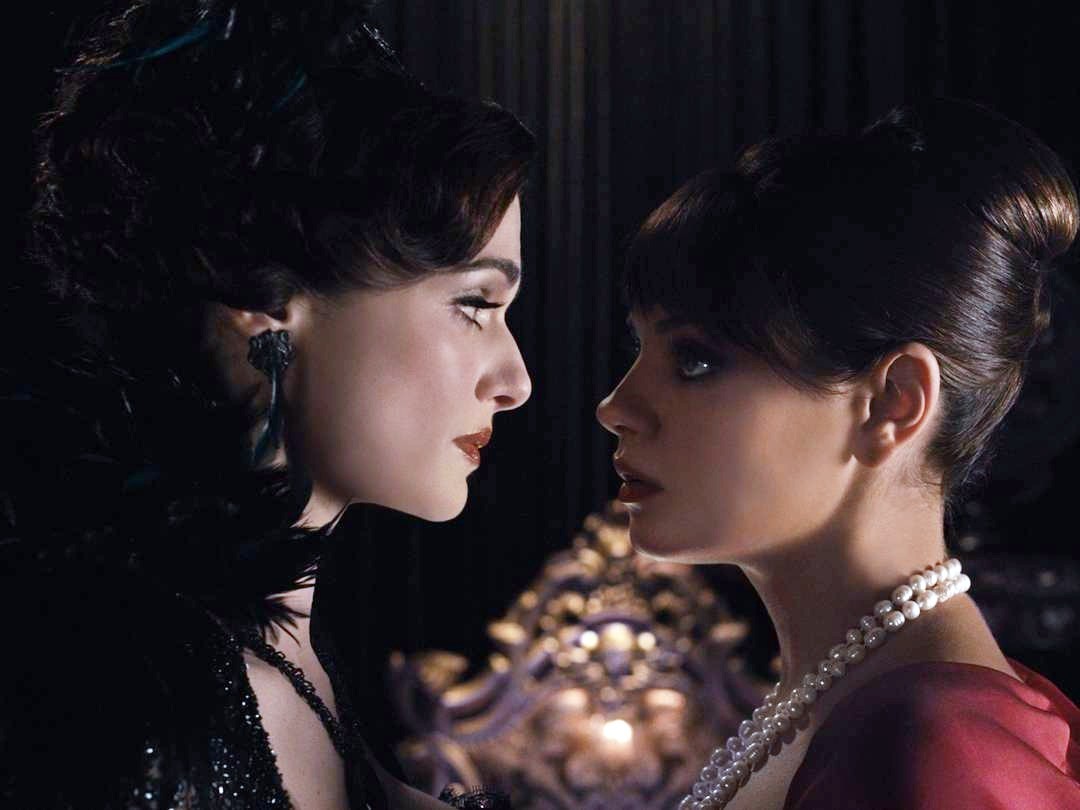
Discovered in the wreckage by a witch named Theadora (Mila Kunis), he is informed of a prophecy that predicts the arrival of a saviour, one which she believes concerns him personally. Theadora is not the only witch in town with the prophesy in mind, however, and both Evanora (Rachel Weisz) and Glinda (Michelle Williams) have their own plans for the so-called Wizard Of Oz.
In one sense a prequel to the 1939 original, Oz The Great In The Powerful also preludes the book series that it was based on, and strives to be a stand-alone success - complete with its own franchise potential - in the process. Sam Raimi certainly has his work cut out for him, not only in terms of appeasing fans of MGM’s The Wizard Of Oz but its lawyers too. For this reason we have a brick road that charts a few hues along on the Dulux chart, a Wicked Witch without a mole on her chin, and, unfortunately, a film that never quite emulates the charm and wonder of its predecessor - whether by design or not.
With past form in the prequel department courtesy of 2011′s Rise Of The Planet Of The Apes, James Franco certainly seemed like a wise choice to front Oz The Great And The Powerful. While his decision to mug and gurn at the camera befits the atmosphere of nostalgia - working particularly well during the black and white, 4:3 opening salvo - it begins to wear a little thin once he enters Oz and his character arc finally begins. It’s less his performance than the part itself that is problematic; his persistent insistence that he isn’t the wizard Oz is looking for is just a little too reminiscent of Alice’s recent trip to Underland.
The film affords precious few opportunities for its cast to actually impress. If Franco isn’t sure of his heroic destiny, then the script is equally uncertain as to the identity of its true antagonist. At one point or another, each of Oz’s three resident witches are fingered as the true Wicked Witch of Oz, leaving Kunis, Weisz and Williams to play for ambiguity when they really need to be making the roles their own. They’re not given much to work with, the key female roles reduced to uninspiring stereotypes that have no place in the land of Oz.
It isn’t just the human characters that disappoint; the token sidekicks are hardly memorable either, with Finley the flying monkey and China Girl quickly proving to be no substitute for the Scarecrow or Tin Man, and they are never really fleshed out or developed beyond their vocal ties to the real world Oscar inhabited prior to the tornado.
It isn’t until the final act that Oz The Great And The Powerful actually starts to redeem itself, with the filmmakers’ efforts to honour the original paying due dividends. There are admittedly flashes of greatness throughout - a witch’s tears are shown to burn her cheeks, foreshadowing the Wicked Witch’s ultimate fate - but it is in these final throes that the film finds an identity of its own. Whereas Disney’s Alice In Wonderland concluded in an incongruous battle that suddenly recasts Lewis Carroll’s heroine as some sort of dragon-slayer, Disney’s Oz The Great And The Powerful actually follows through and delivers a finale that feels completely faithful to the characters and world. The result is as bizarre as it is brilliant.
While Oz The Great And The Powerful may have one or two tricks up its sleeve, however, it is for the most part just unnecessary smoke and mirrors. Though its heart may be in the right place, the script is smart enough to homage the original and Raimi’s determination to make the flying monkeys as scary as possible shows real guts, this particular trip to Oz has very little else to offer.
Director: Sam Raimi
★ ★ ★ ☆ ☆
by Steven Neish
Having returned to Kansas with his travelling circus, magician Oscar Diggs (James Franco) is shown to be a fraud when he cannot heal a young girl who is unable to walk. Forced to flee on a colleague’s hot air balloon, Oscar is pulled into an approaching tornado and transported to the land of Oz.
Discovered in the wreckage by a witch named Theadora (Mila Kunis), he is informed of a prophecy that predicts the arrival of a saviour, one which she believes concerns him personally. Theadora is not the only witch in town with the prophesy in mind, however, and both Evanora (Rachel Weisz) and Glinda (Michelle Williams) have their own plans for the so-called Wizard Of Oz.
In one sense a prequel to the 1939 original, Oz The Great In The Powerful also preludes the book series that it was based on, and strives to be a stand-alone success - complete with its own franchise potential - in the process. Sam Raimi certainly has his work cut out for him, not only in terms of appeasing fans of MGM’s The Wizard Of Oz but its lawyers too. For this reason we have a brick road that charts a few hues along on the Dulux chart, a Wicked Witch without a mole on her chin, and, unfortunately, a film that never quite emulates the charm and wonder of its predecessor - whether by design or not.
With past form in the prequel department courtesy of 2011′s Rise Of The Planet Of The Apes, James Franco certainly seemed like a wise choice to front Oz The Great And The Powerful. While his decision to mug and gurn at the camera befits the atmosphere of nostalgia - working particularly well during the black and white, 4:3 opening salvo - it begins to wear a little thin once he enters Oz and his character arc finally begins. It’s less his performance than the part itself that is problematic; his persistent insistence that he isn’t the wizard Oz is looking for is just a little too reminiscent of Alice’s recent trip to Underland.
The film affords precious few opportunities for its cast to actually impress. If Franco isn’t sure of his heroic destiny, then the script is equally uncertain as to the identity of its true antagonist. At one point or another, each of Oz’s three resident witches are fingered as the true Wicked Witch of Oz, leaving Kunis, Weisz and Williams to play for ambiguity when they really need to be making the roles their own. They’re not given much to work with, the key female roles reduced to uninspiring stereotypes that have no place in the land of Oz.
It isn’t just the human characters that disappoint; the token sidekicks are hardly memorable either, with Finley the flying monkey and China Girl quickly proving to be no substitute for the Scarecrow or Tin Man, and they are never really fleshed out or developed beyond their vocal ties to the real world Oscar inhabited prior to the tornado.
It isn’t until the final act that Oz The Great And The Powerful actually starts to redeem itself, with the filmmakers’ efforts to honour the original paying due dividends. There are admittedly flashes of greatness throughout - a witch’s tears are shown to burn her cheeks, foreshadowing the Wicked Witch’s ultimate fate - but it is in these final throes that the film finds an identity of its own. Whereas Disney’s Alice In Wonderland concluded in an incongruous battle that suddenly recasts Lewis Carroll’s heroine as some sort of dragon-slayer, Disney’s Oz The Great And The Powerful actually follows through and delivers a finale that feels completely faithful to the characters and world. The result is as bizarre as it is brilliant.
While Oz The Great And The Powerful may have one or two tricks up its sleeve, however, it is for the most part just unnecessary smoke and mirrors. Though its heart may be in the right place, the script is smart enough to homage the original and Raimi’s determination to make the flying monkeys as scary as possible shows real guts, this particular trip to Oz has very little else to offer.
Labels:
CGI,
Fantasy,
James Franco,
Michelle Williams,
Mila Kunis,
Prequel,
Rachel Weisz,
Sam Raimi
Thursday, 28 February 2013
Cloud Atlas review
Cloud Atlas (15, 172 mins)
Directors: Tom Tykwer, Lana Wachowski, Andy Wachowski
★ ★ ★ ★ ★
by Steven Neish
While reading the diaries of a young American lawyer (Jim Sturgess) busy concluding business during the Californian gold-rush, amanuensis Robert Frobisher (Ben Whishaw) produces “The Cloud Atlas Sextet”, a masterpiece in part inspired by the dreams of an aging composer. After a chance meeting with Frobisher’s ex-lover in 1973 puts her up against Lloyd Hooks (Hugh Grant), journalist Luisa Rey (Halle Berry) pens a crime novel based on her investigations into his oil company, to be published 27 years later by one Timothy Cavendish (Jim Broadbent). In the future, the plight of a small rebellion and their clone saviour (Doona Bae) continues to impact the life of Zachry (Tom Hanks), 106 years after The Fall.
Written, produced and directed by the Wachowski siblings and Run Lola Run director Tom Tykwer, Cloud Atlas is one of the most expensive independent movies of all time. The film’s ambitious nature goes far beyond finding financers, however, as it attempts to translate David Mitchell’s labyrinthine, meandering and damn-near impossible novel for the big screen.
While Ang Lee has already filmed the unfilmable with Yann Martel’s Oscar-winning Life Of Pi, that story only dared to tackle such everyday concepts as life, love and faith. Cloud Atlas, on the other hand, does not stop there; split into six separate but intertwining stories, the film uses twelve actors, unprecedented prosthesis and countless characters to ruminate on everything from prejudice, bigotry and subjegation to art, fate and the very fabric of time and space.
Unlike most multi-strand stories of its ilk, there isn’t a single dud note to be found in Cloud Atlas‘ pages, leitmotif or frames. Every thread, though diverse, holds its own as each weaves in and out of the other competing and complementing narratives. Whether it’s the poignancy of one composer’s search for inspiration, the comedy of one old codger’s attempted escape from an old folks’ home, or one saviour’s plight in a dystopian future, the filmmakers build an entire universe, generation by generation, that is forever bold, believable and utterly breathtaking.
That they manage to introduce each of the six strands without immediately losing half of the audience is an incredible achievement; that they continue to develop and explore the individual stories across the remaining running time is something else entirely. Not only do the filmmakers manage to cut from story to story in a way that is fluid and meaningful, but they manage to build to simultaneous moments of overwhelming power and emotion in the process, the structure simulating the cyclical nature of its source material without ever becoming repetitive.
Even more astonishing is the work done in front of the camera. During development the decision was made to recycle the core cast across the various stories to add to the overarching sense of inter-connectivity between past, present and future. It works beautifully, as the likes of Hanks, Berry and, perhaps most surprisingly of all, Grant are able to showcase their talents, and within a single film put paid to their individual pigeonholes and typecasts. The actors, unlimited by age, race or gender, each deliver a plethora of perfectly-judged performances. Even if the make-up occasionally falters, their abilities never do.
That said, it would be easy to laugh at Cloud Atlas, and I’m sure many will. Heck, there are days - years, even - in which I’m certain I would do, too. While some of the storylines are funnier than others (intentionally, that is), there is an unabashed grandiosity and pretense that lingers throughout. When grappling with such enormous themes and while boldly pushing the boundaries of technology and belief, however, you will always run the risk of alienating audiences, and the accomplishments of Cloud Atlas are so vast that it really doesn’t matter how you react to it, just that you do react. And that you keep reacting for many years to come as the film is studied, debated and slowly unravelled.
Having now seen the film twice, I’m more convinced than ever that Cloud Atlas is something truly special. It’s a masterpiece for the ages; a master-work and borderline transcendent experience that leaves everything else released so far this year in its wake, somehow managing to tell just about every story imaginable in the space of three hours. How it wasn’t nominated for Best Film, let alone Best Adapted Screenplay or Best Make-Up is still beyond me, but then even after two viewings so too is much of the film.
Directors: Tom Tykwer, Lana Wachowski, Andy Wachowski
★ ★ ★ ★ ★
by Steven Neish
While reading the diaries of a young American lawyer (Jim Sturgess) busy concluding business during the Californian gold-rush, amanuensis Robert Frobisher (Ben Whishaw) produces “The Cloud Atlas Sextet”, a masterpiece in part inspired by the dreams of an aging composer. After a chance meeting with Frobisher’s ex-lover in 1973 puts her up against Lloyd Hooks (Hugh Grant), journalist Luisa Rey (Halle Berry) pens a crime novel based on her investigations into his oil company, to be published 27 years later by one Timothy Cavendish (Jim Broadbent). In the future, the plight of a small rebellion and their clone saviour (Doona Bae) continues to impact the life of Zachry (Tom Hanks), 106 years after The Fall.
Written, produced and directed by the Wachowski siblings and Run Lola Run director Tom Tykwer, Cloud Atlas is one of the most expensive independent movies of all time. The film’s ambitious nature goes far beyond finding financers, however, as it attempts to translate David Mitchell’s labyrinthine, meandering and damn-near impossible novel for the big screen.
While Ang Lee has already filmed the unfilmable with Yann Martel’s Oscar-winning Life Of Pi, that story only dared to tackle such everyday concepts as life, love and faith. Cloud Atlas, on the other hand, does not stop there; split into six separate but intertwining stories, the film uses twelve actors, unprecedented prosthesis and countless characters to ruminate on everything from prejudice, bigotry and subjegation to art, fate and the very fabric of time and space.
Unlike most multi-strand stories of its ilk, there isn’t a single dud note to be found in Cloud Atlas‘ pages, leitmotif or frames. Every thread, though diverse, holds its own as each weaves in and out of the other competing and complementing narratives. Whether it’s the poignancy of one composer’s search for inspiration, the comedy of one old codger’s attempted escape from an old folks’ home, or one saviour’s plight in a dystopian future, the filmmakers build an entire universe, generation by generation, that is forever bold, believable and utterly breathtaking.
That they manage to introduce each of the six strands without immediately losing half of the audience is an incredible achievement; that they continue to develop and explore the individual stories across the remaining running time is something else entirely. Not only do the filmmakers manage to cut from story to story in a way that is fluid and meaningful, but they manage to build to simultaneous moments of overwhelming power and emotion in the process, the structure simulating the cyclical nature of its source material without ever becoming repetitive.
Even more astonishing is the work done in front of the camera. During development the decision was made to recycle the core cast across the various stories to add to the overarching sense of inter-connectivity between past, present and future. It works beautifully, as the likes of Hanks, Berry and, perhaps most surprisingly of all, Grant are able to showcase their talents, and within a single film put paid to their individual pigeonholes and typecasts. The actors, unlimited by age, race or gender, each deliver a plethora of perfectly-judged performances. Even if the make-up occasionally falters, their abilities never do.
That said, it would be easy to laugh at Cloud Atlas, and I’m sure many will. Heck, there are days - years, even - in which I’m certain I would do, too. While some of the storylines are funnier than others (intentionally, that is), there is an unabashed grandiosity and pretense that lingers throughout. When grappling with such enormous themes and while boldly pushing the boundaries of technology and belief, however, you will always run the risk of alienating audiences, and the accomplishments of Cloud Atlas are so vast that it really doesn’t matter how you react to it, just that you do react. And that you keep reacting for many years to come as the film is studied, debated and slowly unravelled.
Having now seen the film twice, I’m more convinced than ever that Cloud Atlas is something truly special. It’s a masterpiece for the ages; a master-work and borderline transcendent experience that leaves everything else released so far this year in its wake, somehow managing to tell just about every story imaginable in the space of three hours. How it wasn’t nominated for Best Film, let alone Best Adapted Screenplay or Best Make-Up is still beyond me, but then even after two viewings so too is much of the film.
Labels:
Action,
Ben Whishaw,
CGI,
Fantasy,
Halle Berry,
Hugh Grant,
Jim Sturgess,
Tom Hanks
Thursday, 20 December 2012
Life of Pi review
Life of Pi (PG, 127 mins)
Director: Ang Lee
★ ★ ★ ☆ ☆
Yann Martel’s award-winning 2001 novel, Life of Pi, has long been considered unfilmable, and without advances in visual effects technology, it may well have been.
This is a film in which, for probably half the running time, there’s a computer generated tiger on screen that for not one second looks anything other than real. That’s a remarkable achievement, up there with your Gollums and Jurassic beasties in terms of quality and realism, and not one that should be taken lightly.
The fact it’s in service of an ambitious but ultimately less than fully satisfying story doesn’t necessarily add credence to the unfilmable debate, but does perhaps reveal that it’s the kind of material that simply works better on the page.
That’s further backed up by the necessity of an all-encompassing narration to get the story across and accompany the episodes because, in its protagonist Pi, we don’t have a character forging his own path, at least initially, but being swept along by fate.
We begin in Canada, where Irrfan Khan’s adult Pi is telling his story to Rafe Spall’s author in a framing device that may at first seem clumsy, but which actually proves to be central to the film’s thematic intent.
“Believe what you want”, he tells him, as he recounts how he began life in India as a young boy called Piscine, after his uncle’s great love for swimming. Shortened to Pi, he follows three different faiths while his parents run a zoo that houses a tiger called Richard Parker. Pi doesn’t understand the nature of animals, thinking he and Richard Parker can be friends, but by the time he’s a teenager (and played by Suraj Sharma) his family are forced to sell everything and move abroad, transporting the zoo to Canada with them.
This makes for a stately first three quarters of an hour or more, until a stunningly executed shipwreck leaves Pi and Richard Parker on a lifeboat in the middle of the Pacific, along with a zebra, an orang-utan and a hyena, although the latter three don’t last long.
What follows is a battle for survival against the elements, hunger and the tiger, which while frequently exhilarating, can become repetitive. Though ostensibly a family film, it acknowledges the violence, the nature of nature as it were, though there are lots of animal antics for kids to coo over, and meerkat fans will be in raptures.
The vast amount of CGI is brilliantly realised yet never draws attention to itself, and there has rarely been a film this gorgeous, especially once we’re out on the open sea with its fantastic pastel shades. But it’s also quite static and given to treading water, missing that vital kick of emotion so that while beautiful, it’s never transcendent, and interesting without ever being able to fully exert a grip.
There’s empathy but never real soul as it rambles towards its point. Because, above all, Life of Pi is a rumination on the power of metaphors, in both storytelling and religion. Depending on your point of view it’s either a stirring parable or a nice story, well told. Its ultimate gambit is a bold one, but it’s not going to be for all tastes.
Director: Ang Lee
★ ★ ★ ☆ ☆
Yann Martel’s award-winning 2001 novel, Life of Pi, has long been considered unfilmable, and without advances in visual effects technology, it may well have been.
This is a film in which, for probably half the running time, there’s a computer generated tiger on screen that for not one second looks anything other than real. That’s a remarkable achievement, up there with your Gollums and Jurassic beasties in terms of quality and realism, and not one that should be taken lightly.
The fact it’s in service of an ambitious but ultimately less than fully satisfying story doesn’t necessarily add credence to the unfilmable debate, but does perhaps reveal that it’s the kind of material that simply works better on the page.
That’s further backed up by the necessity of an all-encompassing narration to get the story across and accompany the episodes because, in its protagonist Pi, we don’t have a character forging his own path, at least initially, but being swept along by fate.
We begin in Canada, where Irrfan Khan’s adult Pi is telling his story to Rafe Spall’s author in a framing device that may at first seem clumsy, but which actually proves to be central to the film’s thematic intent.
“Believe what you want”, he tells him, as he recounts how he began life in India as a young boy called Piscine, after his uncle’s great love for swimming. Shortened to Pi, he follows three different faiths while his parents run a zoo that houses a tiger called Richard Parker. Pi doesn’t understand the nature of animals, thinking he and Richard Parker can be friends, but by the time he’s a teenager (and played by Suraj Sharma) his family are forced to sell everything and move abroad, transporting the zoo to Canada with them.
This makes for a stately first three quarters of an hour or more, until a stunningly executed shipwreck leaves Pi and Richard Parker on a lifeboat in the middle of the Pacific, along with a zebra, an orang-utan and a hyena, although the latter three don’t last long.
What follows is a battle for survival against the elements, hunger and the tiger, which while frequently exhilarating, can become repetitive. Though ostensibly a family film, it acknowledges the violence, the nature of nature as it were, though there are lots of animal antics for kids to coo over, and meerkat fans will be in raptures.
The vast amount of CGI is brilliantly realised yet never draws attention to itself, and there has rarely been a film this gorgeous, especially once we’re out on the open sea with its fantastic pastel shades. But it’s also quite static and given to treading water, missing that vital kick of emotion so that while beautiful, it’s never transcendent, and interesting without ever being able to fully exert a grip.There’s empathy but never real soul as it rambles towards its point. Because, above all, Life of Pi is a rumination on the power of metaphors, in both storytelling and religion. Depending on your point of view it’s either a stirring parable or a nice story, well told. Its ultimate gambit is a bold one, but it’s not going to be for all tastes.
Labels:
Adventure,
Ang Lee,
Based on Book,
CGI
Sunday, 29 July 2012
Brave review
Brave (PG, 100 mins)
Director: Mark Andrews
★ ★ ★ ★ ☆
Pixar’s 13th feature, a magical Scotland-set adventure that represents their first fairytale, is a triumphant return to form for the animation studio following the uncharacteristically poor Cars 2.
Though it’s the first Pixar film with a female lead, Brave develops along the lines that many a Disney princess fable does, where an independently minded character who yearns for something more in their life gets more than they bargained for in a be-careful-what-you-wish-for sort of way.
That lead is Merida (voiced by Kelly Macdonald), a flame-haired princess who is a bit fed up with the expectations placed upon her by her parents; the king (Billy Connolly), who years before lost his leg to a savage bear that still supposedly roams the land, and queen (Emma Thompson), who wants Merida to comport herself in a more princess-ly way.
She’d much rather be a warrior but instead finds herself betrothed, with a clan gathering organised to find her a suitable husband, the clan chiefs presenting their buffoons of sons to win Merida’s hand, much to her annoyance.
Distancing herself from the goings-on, Merida stumbles across a witch from whom she gets a potion designed to change her fate. This leads to a major plot point around the halfway mark that is better left unspoiled, but let’s just say that fates are indeed changed.
What follows is a film about communication between parents and children, and listening to each other’s point of view, even as it deepens into a stirring mythology. Visually it’s an indisputable masterpiece, with every facial nuance and blade of grass and patch of heather alive with the shimmer that $200m worth of computer animation provides. A glorious Patrick Doyle score and a couple of splendid songs are just gravy.
The decision to use predominantly Scottish actors for the voices is an endlessly sensible one, and we can only imagine the kind of horrors the original choice for Merida, Reece Witherspoon, may have inflicted on our ears. Luckily we don’t have to, since the perfectly cast Macdonald combines spirit and warmth to create one of Pixar’s most memorable human characters.
Connolly is a delight, as are the trio of clan chiefs, voiced by Robbie Coltrane, Craig Ferguson and the especially good Kevin McKidd, who also gets to add his Doric tones to his chieftan’s near unintelligible son. Even the non-Scots like Thompson and Julie Walters as the witch with a big part to play in the plot get it just right.
In particular, it’s the sense of Scottish-ness that Pixar absolutely nails, from the visual majesty to the smallest vocal intonations. You couldn’t call it realistic exactly, since it’s a medieval fantasy, but still it’s one of the most authentic Hollywood portrayals of Scotland you’re likely to see, deftly sidestepping the pitfalls of going all Brigadoon on us.
If a criticism is to be levelled, it’s that perhaps it’s a bit thin and one-note when it comes to the plot, that perhaps it resolves a bit easily, neglecting the depth of theme and character that graces the very best of Pixar.
But the flipside of that is that it chugs along at a lick, with little to no flab and a single mindedness of purpose that suitably reflects Merida’s character, with Pixar once again showing that when it comes to animation, even though they're not perfect, they're still the best in the business.
Director: Mark Andrews
★ ★ ★ ★ ☆
Pixar’s 13th feature, a magical Scotland-set adventure that represents their first fairytale, is a triumphant return to form for the animation studio following the uncharacteristically poor Cars 2.
Though it’s the first Pixar film with a female lead, Brave develops along the lines that many a Disney princess fable does, where an independently minded character who yearns for something more in their life gets more than they bargained for in a be-careful-what-you-wish-for sort of way.
That lead is Merida (voiced by Kelly Macdonald), a flame-haired princess who is a bit fed up with the expectations placed upon her by her parents; the king (Billy Connolly), who years before lost his leg to a savage bear that still supposedly roams the land, and queen (Emma Thompson), who wants Merida to comport herself in a more princess-ly way.She’d much rather be a warrior but instead finds herself betrothed, with a clan gathering organised to find her a suitable husband, the clan chiefs presenting their buffoons of sons to win Merida’s hand, much to her annoyance.
Distancing herself from the goings-on, Merida stumbles across a witch from whom she gets a potion designed to change her fate. This leads to a major plot point around the halfway mark that is better left unspoiled, but let’s just say that fates are indeed changed.
What follows is a film about communication between parents and children, and listening to each other’s point of view, even as it deepens into a stirring mythology. Visually it’s an indisputable masterpiece, with every facial nuance and blade of grass and patch of heather alive with the shimmer that $200m worth of computer animation provides. A glorious Patrick Doyle score and a couple of splendid songs are just gravy.
The decision to use predominantly Scottish actors for the voices is an endlessly sensible one, and we can only imagine the kind of horrors the original choice for Merida, Reece Witherspoon, may have inflicted on our ears. Luckily we don’t have to, since the perfectly cast Macdonald combines spirit and warmth to create one of Pixar’s most memorable human characters.
Connolly is a delight, as are the trio of clan chiefs, voiced by Robbie Coltrane, Craig Ferguson and the especially good Kevin McKidd, who also gets to add his Doric tones to his chieftan’s near unintelligible son. Even the non-Scots like Thompson and Julie Walters as the witch with a big part to play in the plot get it just right.
In particular, it’s the sense of Scottish-ness that Pixar absolutely nails, from the visual majesty to the smallest vocal intonations. You couldn’t call it realistic exactly, since it’s a medieval fantasy, but still it’s one of the most authentic Hollywood portrayals of Scotland you’re likely to see, deftly sidestepping the pitfalls of going all Brigadoon on us.
If a criticism is to be levelled, it’s that perhaps it’s a bit thin and one-note when it comes to the plot, that perhaps it resolves a bit easily, neglecting the depth of theme and character that graces the very best of Pixar.
But the flipside of that is that it chugs along at a lick, with little to no flab and a single mindedness of purpose that suitably reflects Merida’s character, with Pixar once again showing that when it comes to animation, even though they're not perfect, they're still the best in the business.
Labels:
Animation,
Billy Connolly,
CGI,
Comedy,
Disney,
Kelly Macdonald,
Kevin McKidd,
Pixar,
Robbie Coltrane,
Scotland
Tuesday, 6 March 2012
John Carter review
John Carter (12A/PG-13, 132mins)
Director: Andrew Stanton
Originally going by the rather more evocative John Carter of Mars, Disney reportedly dropped the second part of the title of this fantasy epic in order to attract a larger, more diverse audience.
With an outlay said to be approaching $300m riding on it, they'll be desperate to secure those votes if this is going to perform at the box office more like their Alice in Wonderland than last year’s disastrous Mars Needs Moms.
On paper the right ingredients are all in place; there’s an exotic setting, fantastical beasties, lashings of digital effects and it’s all incredibly shiny, albeit dulled by the muddy brown gauze of 3D. But something is missing, something which only becomes apparent when you realise you’ve sat through two thirds of the movie and you still don’t really know what the main story is.
A prologue on Mars is first rate mumbo-jumbo, introducing rival cities who’ve been warring for centuries, with Dominic West the chief baddie squaring up against Ciaran Hinds. Hinds’ daughter must marry West in order to save the city, yet West is in possession of a weapon given to him by Mark Strong’s mysterious super-being that has the power to destroy anything in its path and which ought to render much of what follows moot.
Meanwhile, on earth, the year is 1881 and John Carter (Taylor Kitsch) is a rich explorer and ex-soldier who apparently dies suddenly, and leaves his estate to his nephew, Edgar Rice Burroughs – a nod to the man who wrote the John Carter novels on which the movie is based.
Among his possessions is a book that Edgar starts reading and which provides a flashback to 1868, and for a while this turns into a post-Civil war western, as we see John Carter seek a fortune in Apache gold.
But instead he finds a mysterious amulet and gets transported to Mars where he’s taken prisoner by a group of ten feet tall, four-armed green dudes. The gravity on Mars has given Carter the ability to leap huge distances and he impresses them with his fighting skills as part of a lengthy and lumpy setup that overdoes the subplots.
Between this and the power struggle going on between the humanoids, it’s something of a guddle that borrows from all sorts: Star Wars, Flash Gordon, Gladiator, Avatar, Sherlock Holmes and more. As a result it’s far from the most compelling mythology ever put forward in fantasy cinema, never quite managing to create a satisfying one of its own. Of course you could argue that Burroughs set the template for those films when he created the story almost a century ago, but visually there’s no getting away from John Carter’s forebears.
The central story is a largely impenetrable gobbledegook, long on exposition and light on action, at least in the first half. But in the brief bursts of swordplay and leaping about that eventually get peppered in, it’s very impressive stuff that should be leading to a big action climax that never really arrives.
It’s never boring exactly yet it never quite catches fire either, though compensating for that are some truly breathtaking sets and special effects. If as much care and attention had gone into the story then John Carter could have been a cracker, but as it stands, Disney may have to settle for modest success rather than true blockbuster status.
Director: Andrew Stanton
★★☆☆☆
Originally going by the rather more evocative John Carter of Mars, Disney reportedly dropped the second part of the title of this fantasy epic in order to attract a larger, more diverse audience.
With an outlay said to be approaching $300m riding on it, they'll be desperate to secure those votes if this is going to perform at the box office more like their Alice in Wonderland than last year’s disastrous Mars Needs Moms.
On paper the right ingredients are all in place; there’s an exotic setting, fantastical beasties, lashings of digital effects and it’s all incredibly shiny, albeit dulled by the muddy brown gauze of 3D. But something is missing, something which only becomes apparent when you realise you’ve sat through two thirds of the movie and you still don’t really know what the main story is.A prologue on Mars is first rate mumbo-jumbo, introducing rival cities who’ve been warring for centuries, with Dominic West the chief baddie squaring up against Ciaran Hinds. Hinds’ daughter must marry West in order to save the city, yet West is in possession of a weapon given to him by Mark Strong’s mysterious super-being that has the power to destroy anything in its path and which ought to render much of what follows moot.
Meanwhile, on earth, the year is 1881 and John Carter (Taylor Kitsch) is a rich explorer and ex-soldier who apparently dies suddenly, and leaves his estate to his nephew, Edgar Rice Burroughs – a nod to the man who wrote the John Carter novels on which the movie is based.
Among his possessions is a book that Edgar starts reading and which provides a flashback to 1868, and for a while this turns into a post-Civil war western, as we see John Carter seek a fortune in Apache gold.
But instead he finds a mysterious amulet and gets transported to Mars where he’s taken prisoner by a group of ten feet tall, four-armed green dudes. The gravity on Mars has given Carter the ability to leap huge distances and he impresses them with his fighting skills as part of a lengthy and lumpy setup that overdoes the subplots.
Between this and the power struggle going on between the humanoids, it’s something of a guddle that borrows from all sorts: Star Wars, Flash Gordon, Gladiator, Avatar, Sherlock Holmes and more. As a result it’s far from the most compelling mythology ever put forward in fantasy cinema, never quite managing to create a satisfying one of its own. Of course you could argue that Burroughs set the template for those films when he created the story almost a century ago, but visually there’s no getting away from John Carter’s forebears.
The central story is a largely impenetrable gobbledegook, long on exposition and light on action, at least in the first half. But in the brief bursts of swordplay and leaping about that eventually get peppered in, it’s very impressive stuff that should be leading to a big action climax that never really arrives.
It’s never boring exactly yet it never quite catches fire either, though compensating for that are some truly breathtaking sets and special effects. If as much care and attention had gone into the story then John Carter could have been a cracker, but as it stands, Disney may have to settle for modest success rather than true blockbuster status.
Labels:
CGI,
Fantasy,
John Carter,
Sci-Fi
Thursday, 8 December 2011
Alvin and the Chipmunks: Chipwrecked review
Alvin and the Chipmunks: Chipwrecked (U, 87 mins)
Director: Mike Mitchell
Alvin and his brothers Theodore and Simon are computer generated rock star chipmunks whose two movie outings thus far have set box office tills worldwide ringing to the tune of $800m, all the while offering barely a moment’s entertainment. This inevitable second sequel sees them, along with their ‘dad’ Dave (Jason Lee) and girl group the Chipettes on a cruise ship, where what Dave has planned as a relaxing vacation turns into a nightmare thanks to Alvin being more mischievous than ever. A hang-gliding stunt ends up with them lost at sea, where sadly they don’t drown but end up on a desert island where sadly they're not eaten by foxes. Once again, an actual plot is not on the minds of the filmmakers, though the island setting does keep it focussed and there is real threat and stakes. Still, there are many inexplicable elements, with once again the Chipettes voiced by Anna Faris and Christina Applegate when they could be anyone, and really the film is just mostly a tired parade of dance routines and cover songs. There’s no faulting the CGI used to realise the rodents, and there are a couple of nice Cast Away gags, but largely it’s pratfalls and pop culture references, and to say it’s an improvement on the brain-piercing atrocity that was the second Alvin movie, The Squeakquel, is damning with very faint praise indeed.
Director: Mike Mitchell
★ ★ ☆ ☆ ☆
Alvin and his brothers Theodore and Simon are computer generated rock star chipmunks whose two movie outings thus far have set box office tills worldwide ringing to the tune of $800m, all the while offering barely a moment’s entertainment. This inevitable second sequel sees them, along with their ‘dad’ Dave (Jason Lee) and girl group the Chipettes on a cruise ship, where what Dave has planned as a relaxing vacation turns into a nightmare thanks to Alvin being more mischievous than ever. A hang-gliding stunt ends up with them lost at sea, where sadly they don’t drown but end up on a desert island where sadly they're not eaten by foxes. Once again, an actual plot is not on the minds of the filmmakers, though the island setting does keep it focussed and there is real threat and stakes. Still, there are many inexplicable elements, with once again the Chipettes voiced by Anna Faris and Christina Applegate when they could be anyone, and really the film is just mostly a tired parade of dance routines and cover songs. There’s no faulting the CGI used to realise the rodents, and there are a couple of nice Cast Away gags, but largely it’s pratfalls and pop culture references, and to say it’s an improvement on the brain-piercing atrocity that was the second Alvin movie, The Squeakquel, is damning with very faint praise indeed.Tuesday, 8 November 2011
Arthur Christmas review
Arthur Christmas (U, 97 mins)
Director: Sarah Smith
★ ★ ★ ☆ ☆
Arthur Christmas (voiced by James McAvoy) lives at the North Pole with his family, and mostly spends his time reading letters that have been sent to Santa. His dad Malcolm (Jim Broadbent) is the current Father Christmas, but big brother Steve (Hugh Laurie) yearns to take over, and orchestrates the present delivery like a military operation, shown in an ingenious sequence that reveals how the elves manage to deliver to every child in the world in a single night. But when one child is missed out and Steve doesn’t seem to care, it’s up to Arthur and his Grandsanta (Bill Nighy) to get that little girl her bike no matter what. This breezy computer animation from Aardman can only dip after such a fantastic start, and for a while the plot starts to wander as much as Arthur does, as his world tour to deliver the errant present takes him from Mexico to Africa, though with enough wit and imagination to make the journey a pleasant one, and only a bit of steam lost. It remains engaging throughout thanks to cheery voices, the show stolen by Ashley Jensen as Bryony, an elf with very impressive present-wrapping skills, and it’s certainly heartwarming enough to get by.
Director: Sarah Smith
★ ★ ★ ☆ ☆
Arthur Christmas (voiced by James McAvoy) lives at the North Pole with his family, and mostly spends his time reading letters that have been sent to Santa. His dad Malcolm (Jim Broadbent) is the current Father Christmas, but big brother Steve (Hugh Laurie) yearns to take over, and orchestrates the present delivery like a military operation, shown in an ingenious sequence that reveals how the elves manage to deliver to every child in the world in a single night. But when one child is missed out and Steve doesn’t seem to care, it’s up to Arthur and his Grandsanta (Bill Nighy) to get that little girl her bike no matter what. This breezy computer animation from Aardman can only dip after such a fantastic start, and for a while the plot starts to wander as much as Arthur does, as his world tour to deliver the errant present takes him from Mexico to Africa, though with enough wit and imagination to make the journey a pleasant one, and only a bit of steam lost. It remains engaging throughout thanks to cheery voices, the show stolen by Ashley Jensen as Bryony, an elf with very impressive present-wrapping skills, and it’s certainly heartwarming enough to get by.
Labels:
Animation,
CGI,
Hugh Laurie,
James McAvoy
Sunday, 9 October 2011
The Three Musketeers review
The Three Musketeers (12A/PG-13, 110 mins)
Director: Paul W.S. Anderson
This umpteenth version of Alexandre Dumas’ novel announces itself from the off as a Pirates of the Caribbean style fantasy, much too interested in delivering 21st century thrills even though it’s set in the early 1600s.
We meet the three musketeers, the king’s elite guards, who are introduced to us as spies and assassins, and young D’Artagnan (Logan Lerman) who longs to join up with them, even though they're all washed up.
Young king Louis XIII is on the throne of France, but Cardinal Richelieu (Christoph Waltz) is plotting to start a war with England so that he can take over the running of the country, with only the musketeers able to foil his scheme.
A surfeit of baddies certainly doesn’t help to keep matters manageable. As well as Richelieu, there’s Mila Jovovich as M’lady, here turned into a super-assassin, Orlando Bloom’s Buckingham and Mads Mikkelsen’s Rochefort, each of them given a centre stage turn as the musketeers disappear for long stretches, leaving behind a useless teen angst subplot about the king and his bride.
All this takes place against truly lavish, opulent sets and magnificent computer generated recreations of Paris and beyond. No expense has been spared and every moment on screen looks glorious. But with the niceties out of the way, let’s take a look at what doesn’t work, which is pretty much the rest of it.
First things first, get some fun, charismatic actors to play your musketeers. Matthew Macfadyen, Ray Stevenson and Luke Evans are solid enough, but no one’s idea of star attractions, while Lerman fluctuates wildly between an American accent and various parts of Europe.
Next, get a director with the first clue about staging action. It’s a movie full of swordfights and explosions and therefore mildly diverting as it goes, but the action scenes are modelled after 300 and Resident Evil, only without the benefit of sane editing.
The numerous fancy booby traps and devices give it a certain pizzazz, no question, but it becomes all about the whizz-bang, with the anachronistic weaponry and gadgetry an attempt to turn it into a shiny confection rather than a period piece.
Dismal dialogue means it starts out silly and only gets sillier still by the time James Corden rocks up as Planchet with the sole purpose of having a bird shit on his head, and his attempts at comic relief are painful.
And though it’s marginally better than the Peter Hyams swing at the story from a decade ago, The Musketeer, that really isn’t saying a great deal.
Director: Paul W.S. Anderson
★ ★ ☆ ☆ ☆
This umpteenth version of Alexandre Dumas’ novel announces itself from the off as a Pirates of the Caribbean style fantasy, much too interested in delivering 21st century thrills even though it’s set in the early 1600s.We meet the three musketeers, the king’s elite guards, who are introduced to us as spies and assassins, and young D’Artagnan (Logan Lerman) who longs to join up with them, even though they're all washed up.
Young king Louis XIII is on the throne of France, but Cardinal Richelieu (Christoph Waltz) is plotting to start a war with England so that he can take over the running of the country, with only the musketeers able to foil his scheme.
A surfeit of baddies certainly doesn’t help to keep matters manageable. As well as Richelieu, there’s Mila Jovovich as M’lady, here turned into a super-assassin, Orlando Bloom’s Buckingham and Mads Mikkelsen’s Rochefort, each of them given a centre stage turn as the musketeers disappear for long stretches, leaving behind a useless teen angst subplot about the king and his bride.
All this takes place against truly lavish, opulent sets and magnificent computer generated recreations of Paris and beyond. No expense has been spared and every moment on screen looks glorious. But with the niceties out of the way, let’s take a look at what doesn’t work, which is pretty much the rest of it.
First things first, get some fun, charismatic actors to play your musketeers. Matthew Macfadyen, Ray Stevenson and Luke Evans are solid enough, but no one’s idea of star attractions, while Lerman fluctuates wildly between an American accent and various parts of Europe.
Next, get a director with the first clue about staging action. It’s a movie full of swordfights and explosions and therefore mildly diverting as it goes, but the action scenes are modelled after 300 and Resident Evil, only without the benefit of sane editing.
The numerous fancy booby traps and devices give it a certain pizzazz, no question, but it becomes all about the whizz-bang, with the anachronistic weaponry and gadgetry an attempt to turn it into a shiny confection rather than a period piece.
Dismal dialogue means it starts out silly and only gets sillier still by the time James Corden rocks up as Planchet with the sole purpose of having a bird shit on his head, and his attempts at comic relief are painful.
And though it’s marginally better than the Peter Hyams swing at the story from a decade ago, The Musketeer, that really isn’t saying a great deal.
Labels:
Action,
Adventure,
CGI,
Christoph Waltz,
Logan Lerman,
Mila Jovovich
Wednesday, 29 June 2011
Transformers: Dark of the Moon review
Transformers: Dark of the Moon (12A/PG-13, 154 mins)
Director: Michael Bay
★ ★ ☆ ☆ ☆
As a piece of storytelling, the Transformers well has long since run dry, leaving us with a franchise kept on life support by the power of the dollar. Though we had some fun with the first movie in 2007, we got punished by its unendurable sequel two years later, one whose success made a further instalment inevitable.
Now we come to the third go around with the robots in disguise, the good Autobots who keep earth safe from the nasty Decepticons. Rewriting its own mythology yet again, we learn that the during the first Apollo moon landing, the astronauts discovered that the Autobots were already there, leading to a four decade cover-up to keep the news hidden.
Meanwhile at Chernobyl, a part from a long lost Autobot ship has been found, and their leader Optimus Prime wants to get to the technology before the Decepticons, who are plotting to get their hands on it to help them win the age-old war that has been raging between them.
The human face is once again provided by Sam (Shia LaBeouf) who, in one of many extraneous plotlines that drag the running time to insupportable levels, is having difficulty finding a job, even after having saved the planet twice already.
LaBeouf has an undeniable star quality, but as a character Sam is nothing but a lot of running and shouting. With Megan Fox out of the picture, his new squeeze is Carly (Rosie Huntington-Whiteley, making Fox look like Meryl Streep), while also new to the party are the likes of John Malkovich in a showy yet thankless turn as Sam’s boss, and Frances McDormand as a CIA goon.
Pare it back, amputate the ridiculous amounts of unnecessary flab, and you’re still left with absolute galloping nonsense, just as idiotic as what we were put through in the second film. But while it’s not quite the gruelling assault that was Transformers 2, it is every bit as mind-alteringly tedious.
The first hour and a half is the gift that keeps on taking, and though there are a few scenes of robots talking or shape-shifting, it’s light on action and long on explanation. There’s so much to irritate, from the quips coming from the heavily accented ‘bots, to director Michael Bay’s unquenchable penchant for soft rock and scenes set in the golden glow of sundown.
The first major rumble is a freeway chase-and-hit, and it’s undeniably impressive. But don’t even try to follow the machinations of the ropiest of plots and you might just survive to the final reckoning, wherein the streets and buildings of Chicago become a battleground for the robots’ decisive encounter.
Visually, its equal may never have been seen, but it’s entirely investment free. It’s a graceless, grinding, exploding cacophony of computer generated metal and noise, and never in the history of cinema has a film been more geared towards mere spectacle than coherent and involving storytelling.
Director: Michael Bay
★ ★ ☆ ☆ ☆
As a piece of storytelling, the Transformers well has long since run dry, leaving us with a franchise kept on life support by the power of the dollar. Though we had some fun with the first movie in 2007, we got punished by its unendurable sequel two years later, one whose success made a further instalment inevitable.
Now we come to the third go around with the robots in disguise, the good Autobots who keep earth safe from the nasty Decepticons. Rewriting its own mythology yet again, we learn that the during the first Apollo moon landing, the astronauts discovered that the Autobots were already there, leading to a four decade cover-up to keep the news hidden.
Meanwhile at Chernobyl, a part from a long lost Autobot ship has been found, and their leader Optimus Prime wants to get to the technology before the Decepticons, who are plotting to get their hands on it to help them win the age-old war that has been raging between them.
The human face is once again provided by Sam (Shia LaBeouf) who, in one of many extraneous plotlines that drag the running time to insupportable levels, is having difficulty finding a job, even after having saved the planet twice already.
LaBeouf has an undeniable star quality, but as a character Sam is nothing but a lot of running and shouting. With Megan Fox out of the picture, his new squeeze is Carly (Rosie Huntington-Whiteley, making Fox look like Meryl Streep), while also new to the party are the likes of John Malkovich in a showy yet thankless turn as Sam’s boss, and Frances McDormand as a CIA goon.
Pare it back, amputate the ridiculous amounts of unnecessary flab, and you’re still left with absolute galloping nonsense, just as idiotic as what we were put through in the second film. But while it’s not quite the gruelling assault that was Transformers 2, it is every bit as mind-alteringly tedious.
The first hour and a half is the gift that keeps on taking, and though there are a few scenes of robots talking or shape-shifting, it’s light on action and long on explanation. There’s so much to irritate, from the quips coming from the heavily accented ‘bots, to director Michael Bay’s unquenchable penchant for soft rock and scenes set in the golden glow of sundown.
The first major rumble is a freeway chase-and-hit, and it’s undeniably impressive. But don’t even try to follow the machinations of the ropiest of plots and you might just survive to the final reckoning, wherein the streets and buildings of Chicago become a battleground for the robots’ decisive encounter.
Visually, its equal may never have been seen, but it’s entirely investment free. It’s a graceless, grinding, exploding cacophony of computer generated metal and noise, and never in the history of cinema has a film been more geared towards mere spectacle than coherent and involving storytelling.
Labels:
Action,
CGI,
John Malkovich,
Michael Bay,
Sci-Fi,
Shia LaBeouf,
Transformers
Wednesday, 15 June 2011
Green Lantern review
Green Lantern (12A, 114 mins)
Director: Martin Campbell
Comic books heroes have been treated fairly well at the movies so far this summer, but this adaptation of the DC property has to be viewed as a backwards step. It begins with a cosmically silly prologue telling us all about the Green Lantern corps, an intergalactic peacekeeping force whose mystical green rings give them the power to do almost anything.
When one of their number is critically injured while battling a super-foe, he makes his way to earth to use the ring to choose the next Lantern. This turns out to be Hal Jordan (Ryan Reynolds), a hotshot test pilot, whose cocky, reckless nature at first seems at odds with the stoicism of the other 3599 Lanterns, but it’s nothing a training montage can’t fix.
So with the Lantern home planet and earth under threat from the extremely powerful super-baddie, as well as Peter Sarsgaard’s scientist-turned-telekinetic-freakshow, Hal must overcome his human fears and weaknesses and save the day.
On the one hand, there’s not much to actively dislike about Green Lantern. It’s not aggressively stupid, just colossally goofy, with its endless references to the green power of will and the yellow power of fear, and as mythologies go it’s fairly out there.
Most accountable is the one-note script that spends an hour on the most cliched, cheesiest setup imaginable, all dead fathers and flimsy motivations, followed by a sustained burst of passable action. It does look good and the special effects are solid, but it’s just too puerile to be engaging, though the ever-likeable Reynolds does his best, and too reminiscent of kid-friendly chores like Fantastic Four to come close to the more mature and satisfying adventures of recent years.
Director: Martin Campbell
★ ★ ☆ ☆ ☆
Comic books heroes have been treated fairly well at the movies so far this summer, but this adaptation of the DC property has to be viewed as a backwards step. It begins with a cosmically silly prologue telling us all about the Green Lantern corps, an intergalactic peacekeeping force whose mystical green rings give them the power to do almost anything.
When one of their number is critically injured while battling a super-foe, he makes his way to earth to use the ring to choose the next Lantern. This turns out to be Hal Jordan (Ryan Reynolds), a hotshot test pilot, whose cocky, reckless nature at first seems at odds with the stoicism of the other 3599 Lanterns, but it’s nothing a training montage can’t fix.
So with the Lantern home planet and earth under threat from the extremely powerful super-baddie, as well as Peter Sarsgaard’s scientist-turned-telekinetic-freakshow, Hal must overcome his human fears and weaknesses and save the day.
On the one hand, there’s not much to actively dislike about Green Lantern. It’s not aggressively stupid, just colossally goofy, with its endless references to the green power of will and the yellow power of fear, and as mythologies go it’s fairly out there.
Most accountable is the one-note script that spends an hour on the most cliched, cheesiest setup imaginable, all dead fathers and flimsy motivations, followed by a sustained burst of passable action. It does look good and the special effects are solid, but it’s just too puerile to be engaging, though the ever-likeable Reynolds does his best, and too reminiscent of kid-friendly chores like Fantastic Four to come close to the more mature and satisfying adventures of recent years.
Labels:
Action,
Adventure,
CGI,
Fantasy,
Green Lantern,
Mark Strong,
Ryan Reynolds,
Superhero,
Tim Robbins
Tuesday, 26 April 2011
Thor review
Thor (12A/PG-13, 114 mins)
Director: Kenneth Branagh
At first glance there are several elements of Thor that make it an odd choice to kick off the 2011 summer blockbuster season.
Compared to some superhero properties, the Norse god romp is not all that well known outside comic book circles, then there’s an unknown in the title role in the shape of Aussie beefcake Chris Hemsworth.
But most intriguingly, in Kenneth Branagh, it has a director who made his bones bringing Shakespeare to the screen, and who hasn’t been near a major special effects spectacle in his behind-the-camera life.
But recognition matters little when the story is so strong, Hemsworth is really very good indeed, and Branagh brings the whole thing together like he’s been spitting out action extravaganzas his whole career.
Mercifully this isn’t really an origin story, although we do get a lengthy, sometimes chaotic prologue set in 10th century Norway, in which Anthony Hopkins, as Norse god Odin, king of Asgard, tells us about a war with the Frost Giants (stay with it).
Just as Odin's son Thor is to become king ahead of his brother Loki, the Frost Giants make a return and Thor wants to fight back, against his father’s wishes, and as punishment is cast out of Asgard and down to earth as a mortal.
Meanwhile in modern day New Mexico, Natalie Portman and her team of scientists are doing something or other scientific in the middle of the desert when Thor falls from the sky with no idea where he is.
He enlists Portman’s help to find his magic hammer, Mjolnir, a device of unimaginable power which was last spotted if you hung about after the end credits of Iron Man 2 being found by Agent Coulson of the mysterious organisation S.H.I.E.L.D.
Such details may seem insignificant, but it’s all part of the broadening of the Marvel comics universe that started with Samuel L. Jackson’s appearances in the Iron Man films, Robert Downey Jr in The Incredible Hulk and building up to The Avengers next summer, which will feature all the major players from the Marvel stable.
It’s every bit as cuckoo as it sounds, but good grief, is it ever fun, and mostly very well paced save for a slight lag in the middle when the pieces get put into place for the all action finale. Thor may not get to a great deal of superhero-ing during this phase but, by great Odin’s raven, when it comes, the hammer time is stunning as he fights back against betrayal in Asgard and a massive destructive robot on earth.
Everything about Thor works on a technical level, from the luscious design of Asgard, to the sparkling visual effects and Patrick Doyle's immersive score. Hemsworth is hugely engaging, not just in using his astonishing physicality to great effect in the bruising action scenes, but in his line readings and pratfalls that help to make the movie surprisingly funny thanks to Thor’s fish out of water antics.
It’s almost enough to make you think this might be a very good summer at the movies after all.
Director: Kenneth Branagh
★ ★ ★ ★ ☆
At first glance there are several elements of Thor that make it an odd choice to kick off the 2011 summer blockbuster season.
Compared to some superhero properties, the Norse god romp is not all that well known outside comic book circles, then there’s an unknown in the title role in the shape of Aussie beefcake Chris Hemsworth.
But most intriguingly, in Kenneth Branagh, it has a director who made his bones bringing Shakespeare to the screen, and who hasn’t been near a major special effects spectacle in his behind-the-camera life.
But recognition matters little when the story is so strong, Hemsworth is really very good indeed, and Branagh brings the whole thing together like he’s been spitting out action extravaganzas his whole career.
Mercifully this isn’t really an origin story, although we do get a lengthy, sometimes chaotic prologue set in 10th century Norway, in which Anthony Hopkins, as Norse god Odin, king of Asgard, tells us about a war with the Frost Giants (stay with it).
Just as Odin's son Thor is to become king ahead of his brother Loki, the Frost Giants make a return and Thor wants to fight back, against his father’s wishes, and as punishment is cast out of Asgard and down to earth as a mortal.
Meanwhile in modern day New Mexico, Natalie Portman and her team of scientists are doing something or other scientific in the middle of the desert when Thor falls from the sky with no idea where he is.
He enlists Portman’s help to find his magic hammer, Mjolnir, a device of unimaginable power which was last spotted if you hung about after the end credits of Iron Man 2 being found by Agent Coulson of the mysterious organisation S.H.I.E.L.D.
Such details may seem insignificant, but it’s all part of the broadening of the Marvel comics universe that started with Samuel L. Jackson’s appearances in the Iron Man films, Robert Downey Jr in The Incredible Hulk and building up to The Avengers next summer, which will feature all the major players from the Marvel stable.
It’s every bit as cuckoo as it sounds, but good grief, is it ever fun, and mostly very well paced save for a slight lag in the middle when the pieces get put into place for the all action finale. Thor may not get to a great deal of superhero-ing during this phase but, by great Odin’s raven, when it comes, the hammer time is stunning as he fights back against betrayal in Asgard and a massive destructive robot on earth.
Everything about Thor works on a technical level, from the luscious design of Asgard, to the sparkling visual effects and Patrick Doyle's immersive score. Hemsworth is hugely engaging, not just in using his astonishing physicality to great effect in the bruising action scenes, but in his line readings and pratfalls that help to make the movie surprisingly funny thanks to Thor’s fish out of water antics.
It’s almost enough to make you think this might be a very good summer at the movies after all.
Labels:
Action,
Anthony Hopkins,
Blockbuster,
CGI,
Chris Hemsworth,
Kenneth Branagh,
Marvel,
Natalie Portman,
Superhero,
Thor
Monday, 4 April 2011
Rio review
Rio (U, 96 mins)
Director: Carlos Saldanha
Parrot Blu (voiced by Jesse Eisenberg) is taken from his home in the rainforest and ends up by accident in snowy Minnesota where he’s raised domesticated and flightless. But he’s the last blue macaw of his type, and so an ornithologist takes him to Brazil to mate with the last remaining female, Jewel (Anne Hathaway), only for the pair to be kidnapped by poachers. The only reason Rio would appear to exist (aside from the obvious financial incentives) is to showcase its bright and colourful, samba-infused exoticism. Did its makers just see Up and think South America looked like a good place to stage a cartoon? Because underneath its surface polish, it’s thematically empty, with nothing to distinguish it from every other run-of-the-mill animated effort that’s more about noise and spectacle than a story worth telling. The search round Rio de Janeiro to get Blu and Jewel back comes complete with stale one-liners and frantic action, but is light on laughs and excitement. Voicing Blu, Eisenberg is good value, nicely parlaying his Zombieland nebbishness, and Jemaine Clement shines as the cockatoo baddie, even getting to do a Conchords-style number, sadly the only highlight among a small collection of forgettable and superfluous songs.
Director: Carlos Saldanha
★ ★ ☆ ☆ ☆
Parrot Blu (voiced by Jesse Eisenberg) is taken from his home in the rainforest and ends up by accident in snowy Minnesota where he’s raised domesticated and flightless. But he’s the last blue macaw of his type, and so an ornithologist takes him to Brazil to mate with the last remaining female, Jewel (Anne Hathaway), only for the pair to be kidnapped by poachers. The only reason Rio would appear to exist (aside from the obvious financial incentives) is to showcase its bright and colourful, samba-infused exoticism. Did its makers just see Up and think South America looked like a good place to stage a cartoon? Because underneath its surface polish, it’s thematically empty, with nothing to distinguish it from every other run-of-the-mill animated effort that’s more about noise and spectacle than a story worth telling. The search round Rio de Janeiro to get Blu and Jewel back comes complete with stale one-liners and frantic action, but is light on laughs and excitement. Voicing Blu, Eisenberg is good value, nicely parlaying his Zombieland nebbishness, and Jemaine Clement shines as the cockatoo baddie, even getting to do a Conchords-style number, sadly the only highlight among a small collection of forgettable and superfluous songs.
Labels:
Animation,
Anne Hathaway,
CGI,
Jemaine Clement,
Jesse Eisenberg,
Rio
Subscribe to:
Posts (Atom)