Showing posts with label Fantasy. Show all posts

Wednesday, 21 October 2015

The Last Witch Hunter review

The Last Witch Hunter (12A/PG-13, 106 mins)
Director: Breck Eisner
★ ★ ★ ☆ ☆

When you’re the star of what is currently the most lucrative franchise in cinema and can pretty much take your pick of projects, it looks like an odd choice for Vin Diesel to pitch himself front and centre in a hokey-looking fantasy horror.

There have been no shortage of duds involving witches and their ilk of late, and anything with a whiff of Dungeons and Dragons has been roundly rejected by audiences. And yet The Last Witch Hunter, while by no means particularly good, sets its sights on a low bar and clears it with some style. By maintaining a sense of fun and of its own silliness it stays on just the right side of ripe, and Diesel more or less manages to sell it, even through the nonsense he's forced to speak.

A meaty prologue gives us medieval Vin, where he and his beardy, leather-clad pals tackle a witch queen who has been terrorising the lands and is responsible for spreading the plague. The only way to deal with her is, of course, by sticking her through the heart. Diesel’s character, named Kaulder, manages this, but in the process the witch curses him with immortality.

There can be only one, and 800 years later we're in modern day New York where Kaulder functions as a guardian, keeping an eye on witches and making sure they stick to their code of not bothering the humans. Given that the title conjures notions of him spending most of the running time, well, hunting witches, it’s not the all out action fest that might have been expected.

Instead there’s a lot time devoted to details and backstory. There’s an old priest and a young priest, played by Michael Caine and Elijah Wood, who are known as Dolans, an order of aides who have been by Kaulder’s side through the centuries. With Caine’s Dolan 36 about to hand over the reins to Wood’s 37, he comes under attack, leading Kaulder to investigate what some bad witches may be up to in the city.

When it comes to plotting The Last Witch Hunter is largely gibberish, particularly in a final third that grows increasingly undisciplined. But there are still some worthwhile developments along the way and in terms of the mythology created, it actually contains one or two original ideas.

It's not been put together on the usual mega budget but the special effects and production design are of an accordingly decent standard, and it really does look very nice. It has a sense of humour, Diesel is a competent star, and for daft undemanding fun you could do a lot worse.

Tuesday, 3 February 2015

Jupiter Ascending review

Jupiter Ascending (12A/PG-13, 127 mins)
Directors: The Wachowskis
★ ★ ★ ☆ ☆

If you're after a full-on bonkers fantasy epic that's as beautifully designed as it is camp, then Jupiter Ascending should fulfil most of your requirements. Jupiter (Mila Kunis) is the ordinary earth girl who learns she's a reincarnated space princess, with Channing Tatum as her half-wolf, half-albino, pointy-eared, hover-booted protector in an immensely silly intergalactic power struggle. A first half on earth is mostly a series of stylish fights and rescues, and while the second half gets a bit more talky and plotty, the move to space allows The Wachowskis to go daft with their gadgets and set design. They already reinvented the action wheel with The Matrix so there's not really anything here to make jaws drop, but they can still put together an elaborate, FX-heavy sequence without having to resort to crazed editing. It’s might be missing that massive action centrepiece, but there’s always something worth looking at, Eddie Redmayne hams it up magnificently as the baddie, and in terms of fun it’s far more Flash Gordon than John Carter.

Wednesday, 17 December 2014

Night at the Museum: Secret of the Tomb review

Night at the Museum: Secret of the Tomb (PG, 98 mins)
Director: Shawn Levy
★ ★ ★ ☆ ☆

Talk about stretching an idea so thin you can start to see through it. The premise of the first Night at the Museum movie eight years ago was that a magical tablet could bring the exhibits of a New York museum to life at night, which was realised through what at the time were fairly nifty computer generated effects.

Ben Stiller was Larry, the night security guard at the museum who got caught up in the middle of the mayhem when dinosaur skeletons and Attila the Hun starting running amok. Now Larry is in charge of putting on a show for dignitaries, who think the animated exhibits are special effects.

Before we get to that there’s a prologue set in 1930s Egypt that gives us a bit of half-hearted background on the tablet, as some Indiana Jones-style tomb raiders disturb it amid the standard warnings of a curse.

For reasons never explained this curse involved absolutely nothing happening for nearly 80 years, but now the tablet is corroding and the exhibits are going screwy. The solution, invented by the film’s writers for no reason other than it would be nice to go to London, is that they must go to the British Museum to try to free the curse.

Or something. Because none of it follows a remotely logical or coherent path, and there’s really very little to it in terms of threat or excitement. The situation is paper-thin, the jokes are lame and the special effects aren’t even particularly special. It looks pretty horrible too, the direction is lacklustre and it seems scaled down from previous instalments.

There’s the need for some uninspired padding involving Larry’s teenage son, and whether he will or won’t go to college. Another exciting subplot to look out for in the fourth film; will Larry do the dishes or leave them until the morning?

Yet for some reason it’s perfectly watchable and affable, mostly thanks to a game cast, and mostly thanks to Dan Stevens. He pops up as Sir Lancelot and has some fun with the action shenanigans while also demonstrating a nice way with comic timing as he fails to understand anything going on around him.

We also get the final acting appearance of Robin Williams, who reprises his role as Theodore Roosevelt. It’s hardly a fitting send off, with he and just about every character other than Larry and Lance given insufficient material to make any impression.

In the end this is unlikely to be remembered as one of the great trilogies. Really it barely passes muster, and in a few years there might not even be many people who remember it was a trilogy at all.

But it rattles along quickly and it’s never dull, which actually counts for something. And if it looks like it’s only scraping a third star by the skin of its teeth, which it is, that’s because it’s Christmas, and it’s because we get to see Dick Van Dyke dance.

Wednesday, 10 December 2014

The Hobbit: The Battle of the Five Armies review

The Hobbit: The Battle of the Five Armies (12A/PG-13, 144 mins)
Director: Peter Jackson
★ ★ ★ ☆ ☆

It’s been a fair old trek to get to here, this final part of the Hobbit prequel trilogy. And, much like the experiences of its characters, it’s been a frequently exhausting and arduous journey punctuated by individual moments of relief and enjoyment.

The late decision to make three films rather than two has meant it’s often felt like you were journeying across Middle Earth in real time, and it all began to smack of cashing in. We certainly get value for money in terms of minutes in the cinema, even if this finale is a relatively brisk sub-2.5 hours, but an awful lot of that time feels like we’re treading water.

Has it been worth it in the end? Will many people plough through the six-film marathon of these plus the Lord of the Rings trilogy or will they, like now happens with Star Wars, judiciously skip the weaker entries in order to get to the good stuff?

Certainly one element where this is likely to score with fans is in the linking done to Rings. Some of it might be a bit clunky and forced, but more often than not the bridge building is both fun and evocative and likely to put a Christmas re-watch of Rings on a lot of people’s agendas.

But for now, we rejoin this poor relation directly after the end of last year’s second film, as dragon Smaug wreaks his desolation on the village of Laketown. Exposing the somewhat arbitrary stopping point of Part 2, this episode is swiftly resolved, leaving dwarf leader Thorin (Richard Armitage) in control of the mountain hall of Erebor and its enormous piles of gold.

The trouble is he’s turned mad with power, and a lot of time is spent on Thorin’s intransigence, which is threatening to be the catalyst for war, with the elves and men also ready to stake a claim to the treasure. But it’s nowhere near as compelling as the hold the One Ring had over Frodo and mostly there’s a lot of sitting about, which at least makes a change from all the walking in the first two movies.

Having really shone in the second movie, Martin Freeman is sidelined here as Bilbo becomes a minor character in his own movie. But when Bilbo does get involved, he proves the worth of Hobbits and offers a reminder of why we love them.

It’s difficult though to have any great investment in these characters beyond Bilbo and wizard Gandalf (Ian McKellen), which is a major issue. Billy Connolly turns up as a dwarf king with bizarrely computer enhanced features, to swear and stick the nut on orcs but, as ever, almost none of Bilbo’s companions stand out.

Lord of the Rings succeeded because we cared deeply about the Fellowship, but that’s sadly lacking here. It also worked because it blended real world locations with brilliantly realised visual effects; now it looks like none of it might be real at all, especially darker scenes. Just because Peter Jackson has the ability to create anything with CGI, it doesn’t mean he should. Frankly at times it looks ridiculous, and when you’ve got dwarves riding rams up mountainsides you’ve probably gone too far.

This is highlighted even more by the truly horrific High Frame Rate process, which makes proceedings look like a filmed play, shiny and inauthentic and totally lacking in filmic texture. It’s not too bad when no one has to move but most of the time it’s embarrassing, and it’s astonishing that someone thought something that looked as bad as this was acceptable to project for top dollar.

Still, Jackson is more than capable of conjuring greatness in bursts, starting with Smaug’s terrifying, fire-breathing onslaught, even if we then have to wade through the added guff and padding of the arguments among the Laketown survivors.

But the movie is called The Battle of the Five Armies, and when the men, elves, dwarfs, orcs and various sundry beasties go head to head, it really earns its corn. Pretty much the final hour is a massive ruck that impresses with its sheer scale at least, though some of the armies look a little too mathematically precise in the way they're computer generated. Things get much more involving when it splinters off into individual fights, some of which are exciting and entertaining, some of which go on forever.

In the end, if it works at all, it’s because of the world we’re in, it’s because of what Tolkien has created and it’s because Lord of the Rings exists and we know there’s so much more to see here.

No doubt Jackson cares about the product he’s delivering with this prequel trilogy, but ultimately it will probably be looked upon by audiences as an obligation rather than a necessity.

Sunday, 27 July 2014

Guardians of the Galaxy review


Guardians of the Galaxy (12A/PG-13, 121 mins)
Director: James Gunn
★ ★ ★ ★ ☆

The Marvel cinematic universe took a step away from typical comic book shenanigans towards more serious fare earlier this year with Captain America: The Winter Soldier.

It’s all colour and flash again though for Guardians of the Galaxy, which arrives amid high anticipation levels as the summer’s last major blockbuster. It’s also the most standalone film set in this world, linked to previous Marvel entries only by post-credit Easter eggs in Avengers Assemble and Thor 2.

In fact in tone, humour and backdrop the film it most closely resembles is Serenity, and it’s unlikely to be a coincidence that the director of that film and Avengers Assemble are one and the same. Endlessly glib but rarely smug, it’s a thrilling diversion filled with more funny lines and perfectly timed comedic beats than many out-and-out comedies.

It’s not all yucks though, and there’s a danger of it sinking under the weight of its own ambitions during an opening salvo that can border on gibberish. We’re bombarded by character names and place names to the extent that it seems like there might be an in-between film somewhere that we haven’t seen where we were supposed to have learned all this.

That sense of confusion begins straight away with a prologue set on earth in 1988, where teenager Peter is confronted with the death of his mother. Moments later he’s whisked away by a spaceship and we jump without ceremony to outer space, where the adult Peter (Chris Pratt) is an outlaw adventurer in the Indiana Jones mould.

In a way it’s refreshing that over-explanation isn’t a problem, but a little more time spent on details might have been nice. But that passes reasonably quickly and what it boils down to is pretty much a treasure hunt between a bunch of interested parties who are after an orb that Peter has pilfered.

His efforts land him prison alongside a ragtag group of criminals and mercenaries. It takes quite a while for this lot to actually be announced as Guardians, and what it might be that they're guarding the galaxy from, but it’s worth the wait. The threat turns out to involve Lee Pace and Karen Gillan as murderous aliens whose stories and motivations are hashed out during the gibberish phase.

Despite the initial setbacks, it evolves into an effortlessly entertaining fantasy adventure. It’s an astonishing piece of world-building, filled with evocative locations, wildly imaginative gizmos and gadgets and some amazing characters. No one is able to steal the show among the Guardians because everyone, both the character and the actor playing them, is fantastic.

It’s a star-making turn from Pratt, who uses his roguish charisma to move up from amiable supporting roles in Her or voicing the lead in the Lego movie. Zoe Saldana is his match as the bloodthirsty Gamora, and while less might have been expected from wrestler-turned actor Dave Bautista, his portrayal of the vengeful Drax is as heartfelt and funny as any of the Guardians.

The computer generated Guardians are great too: Rocket, a raccoon with a plan voiced with real fizz by Bradley Cooper, and a walking tree voiced by Vin Diesel who can only say “I am Groot”. There’s an exuberance to the violence too, facilitated by all of the main characters being completely psychotic.

Pause for a moment to put Guardians of the Galaxy under any serious scrutiny and perhaps there isn’t really very much there. The plot is minor and the finale suffers from the same big-fight syndrome as most movies of its ilk, but it’s so slick, so entertaining and so funny that its flaws are easily overlooked.

Monday, 3 March 2014

300: Rise of an Empire review

300: Rise of an Empire (15/R, 102 mins)
Director: Noam Murro
★ ★ ☆ ☆ ☆

The reams of backstory and exposition that make up much of this somewhat uncalled-for action sequel fill us in on how Greek general Themistocles (Sullivan Stapleton) made an enemy of Xerxes, who became the god-king that Gerard Butler and his Spartans fought in the original 300 seven years ago. None of this is particularly relevant to what’s being told here, a battle being waged by Xerxes’ second-in-command, Artemisia (Eva Green), and her massed Persian forces, with Themistocles wanting Sparta to join the fight. What follows is essentially the same sea battle played out over and over, doused in torrents of computer generated blood that passed muster back when this sort of thing was a novelty, but which is now just kinda boring. Grand-scale carnage and destruction it may be, but there’s very little to engage with thanks to woeful dialogue and scarcely more believable performances. A couple of stunning shots offer little respite, and it’s rather cheapened by the fact it’s all taking place at more or less the same time as the events of 300, meaning we’re watching this third division stuff while the Champions League is on. It seemed these words would never be written, but Gerard Butler is badly missed.

Wednesday, 11 December 2013

The Hobbit: The Desolation of Smaug review

The Hobbit: The Desolation of Smaug (12A/PG-13, 161 mins)
Director: Peter Jackson
★ ★ ★ ★ ☆

A decade ago, Peter Jackson made our Christmases with his astonishing realisations of The Lord of the Rings trilogy.

This time last year he came to us more like Scrooge or Alan Rickman in Robin Hood with his cry of “call off Christmas”, with the plodding, ruinously boring The Hobbit: An Unexpected Journey, the first part of his new prequel trilogy based on J.R.R. Tolkien’s beloved (but quite thin) book.

With so much extraneous gubbins crammed in, fears grew that Jackson was milking a dead cow, but miraculously he’s managed to get the series back on track with this second episode, one that both cleanses the palette after the first film, and frustrates that it turned out to be so disappointing.

It begins with a flashback, which could be viewed as just another piece of stuffing designed to justify what is yet again a hefty running time. But it’s a fairly brief tidbit that shows us how the wizard Gandalf (Ian McKellen) met dwarf Thorin (Richard Armitage) to persuade him to try to unite the kingdoms and reclaim the throne that was taken from him.

Also give thanks that this serves as a very potted recap of all the setup done in Unexpected Journey, so that we can then get straight back in to the action and not have to worry about Jackson’s indulgences on the level of what we witnessed first time, when Elijah Wood’s Frodo and old Bilbo were wheeled out for no justifiable reason whatsoever.

So we find Gandalf, hobbit Bilbo (Martin Freeman) and his newly acquired dwarf pals being chased across Middle Earth by murderous orcs as they continue deep into their quest to reach the dwarf kingdom, Erebor.

This is an immediately pleasant reminder of what many have come to love about these movies: brilliantly costumed and made-up actors running across breathtaking New Zealand landscapes being filmed by swirling helicopters.

And it’s as a visual spectacle that The Desolation of Smaug really triumphs. It’s clear from the first frame that this is a richly textured world, brim-filled with exceptional production design, albeit much of it of the computer generated variety. That’s particularly true if you avoid the heinous High Frame Rate presentation that so hamstrung last year’s movie, making it look not so much like Middle Earth as a home-videoed pantomime.

The quest itself has also turned into a far more compelling one, as we bounce from chase to fight in a whiz-bang opening hour that introduces us to bear-men and giant spiders while backgrounding the threat of the Necromancer, a malevolent force hanging hanging over the world.

We also never lose sight of the dark power of the Ring, the trinket binding these movies together, and the effect this has on Bilbo. His encounter with the spiders reminds us that this isn’t just an action fantasy, but a work unafraid to tackle themes of greed and corruption, and we’re blessed to be in the hands of such splendid actors as McKellen and Freeman, though they do disappear for a stretch in a midsection that represents one of the few dips in pace as we arrive at a man-village.

But again, bigger themes are at hand, as we pause to blend in a real-world message of poverty and the gulf between the rich and the underprivileged, wrapped in the politics of a fantasy village. We even get an appearance from Stephen Fry.

Plenty has been added, as is Jackson’s way, but not too much that seems pointless or superfluous – silly dishwashing scenes and the like that slowed the first film to a crawl. But otherwise the movie rarely loses sight of its primary action goal. There’s loads of peril, even among the numerous pitstops, and the threat of a deadline helps too. And outwith that slight middle sag, this is rattling, exciting and executed with near-unparalleled technical bravado.

And Jackson has remembered how to do action again. A dwarf-orc-elf fight alongside and down a raging river is a masterclass in momentum, thrust and imagination, and stands as one of the highlights of all our time in Middle Earth.

Bilbo the character earns his corn too, after being a bit of a passenger in his own movie first time out. He displays increasing courage and fortitude, and actually does some burgling, fulfilling the role he was brought into the quest for in the first place. The titular Smaug, the dragon that laid waste to Erebor, is a fine creation too, and we get to see plenty of him in a second half where the raised stakes really come into play.

Mind you, more than half the dwarfs are still anonymous or interchangeable, perhaps inevitable with so many of them. Other new characters work fairly well though, particularly the snobby, dwarf-hating elves, each with their own motivations and desires. Old Fellowship member Legolas (Orlando Bloom) returns alongside newcomer Tauriel (Evangeline Lilly) to knock countless orc heads together (this is a remarkably violent film, by the way, surely setting the record for decapitations in a family-friendly certificate), one of a few nice touches to tie us in with the Lord of the Rings trilogy.

And we’re back to honouring those great films after the initial misstep. Though the decision to break a slim Hobbit story into three films is still an ethically shaky, financially driven one, at least audiences will be getting something for their money this time around. Christmas is saved, for now.

Monday, 28 October 2013

Thor: The Dark World review

Thor: The Dark World (12A/PG-13, 112 mins)
Director: Alan Taylor
★ ★ ★ ★ ☆

Now that we’re firmly into Phase Two of Marvel’s plan for total cinema domination, the titles are coming thick and fast.

The next Captain America will be along in the spring, and in a year that’s already brought the terrific Iron Man 3 we now have this sequel to Thor, a movie that was bright, funny and carried along with a real zip by director Kenneth Branagh. This first return to that world doesn’t quite measure up, thanks to some uninspired storytelling, but it’s still a breezy and fun couple of hours.

After the events of Avengers Assemble, Norse god Thor (Chris Hemsworth) is busy keeping peace across the realms. Since almost all the necessary introductions were made first time round, we can get straight to it, something that also allows characters slightly down the cast list to get their moment to shine.

The main bit of setup required is a prologue that goes all Lord of the Rings on us, as we learn about the Dark Elves led by Malekith (Christopher Eccleston). He’s after some cosmic goo called the Aether, which will allow him to get up to no good when the nine realms align for the first time in 5000 years, something called the Convergence.

Back in Asgard, Loki (Tom Hiddleston) has had to answer for his crimes in Thor and Avengers Assemble, and left to rot in prison until the plot requires him. Meanwhile, on earth, Natalie Portman’s scientist, Jane, is trying to adjust to life after Thor. But she gets dragged back into events when she’s alerted by her colleagues about some sort of portal they’ve found. Through a vague and confused bit of plotting, she comes into contact with the Aether via the portal, and gets somehow infected by it.

Thor brings her to Asgard in an attempt to cure her, but don’t look for much sense during this stretch that also brings an attack from Malekith that makes a mockery of the supposed Asgardian defences.

It’s one of two or three key sequences that, while never exactly botched, just point to a lack of directorial craft and poor editing choices. For all its story, and backstory, the writing isn’t the strong suit here. The big picture is often little more than gibberish, but individual scenes please and are still capable of moments of wonder.

Much of what draws audiences in comes from its technical brilliance. Glorious production design is used to realise Asgard and the other worlds we visit. Then of course there’s the action, generally rousing if a little repetitive at times. Thor swinging his hammer at a monstrous foe is enjoyable, but there’s only so many times we can watch that before it becomes monotonous. But come the Convergence, a grand finale awaits that makes the more sluggish passages worthwhile.

But the real selling point is the humour. Where the first film largely was largely comprised of Thor’s fish out of water antics, this time everyone gets the opportunity for a one-liner or two, and most comedies wish they were as funny as this.

It’s on a modest scale compared to the Avengers, but then so is almost every movie, but Thor: The Dark World will do very nicely until the next one of those comes along.

Monday, 5 August 2013

Percy Jackson: Sea of Monsters review

Percy Jackson: Sea of Monsters (PG, 106 mins)
Director: Thor Freudenthal
★ ★ ☆ ☆ ☆

The mash-up of Greek myth and Harry Potter (lots and lots of Harry Potter) that was Percy Jackson and the Lightning Thief from a couple of years ago was always intended to kick off a series of movies, and so we return to the world for this rather tired sequel.

Modern day teenager Percy Jackson (Logan Lerman) discovered in the opening entry that he was the son of Poseidon, but without the need for lengthy setups this time round, we jump straight into Percy at Hogwarts, sorry, Camp Half-Blood. After saving the day in the first movie, his worry is that he was a one-quest wonder, not as worthy a hero as believed, but an attack on their enchanted camp sends Percy and his pals on a quest to recover the Golden Fleece, which involves travelling to the Sea of Monsters where the bad guys are trying to resurrect the Titan, Cronos.

Though far from original, this is reasonably agreeable fantasy fare, especially when compared to the lumbering Clash and Wrath of the Titans from which it takes much inspiration. But it’s just all so forgettable, so where the first film still managed to be acceptably fun, despite its glaring similarity to Potter, this is dull as well as derivative. Grave import is given to very goofy events, with none of the heft of Potter, nor the breadth of characters to invest in, with only a cameo by Nathan Fillion briefly piercing the torpor. Drenched in CGI, the action set pieces are unmemorable, just stepping stones on the way to a dumb finale and the threat of yet more adventures to follow.

Friday, 8 March 2013

Oz The Great And The Powerful review

Oz The Great And The Powerful (PG, 130 mins)
Director: Sam Raimi
★ ★ ★ ☆ ☆

by Steven Neish

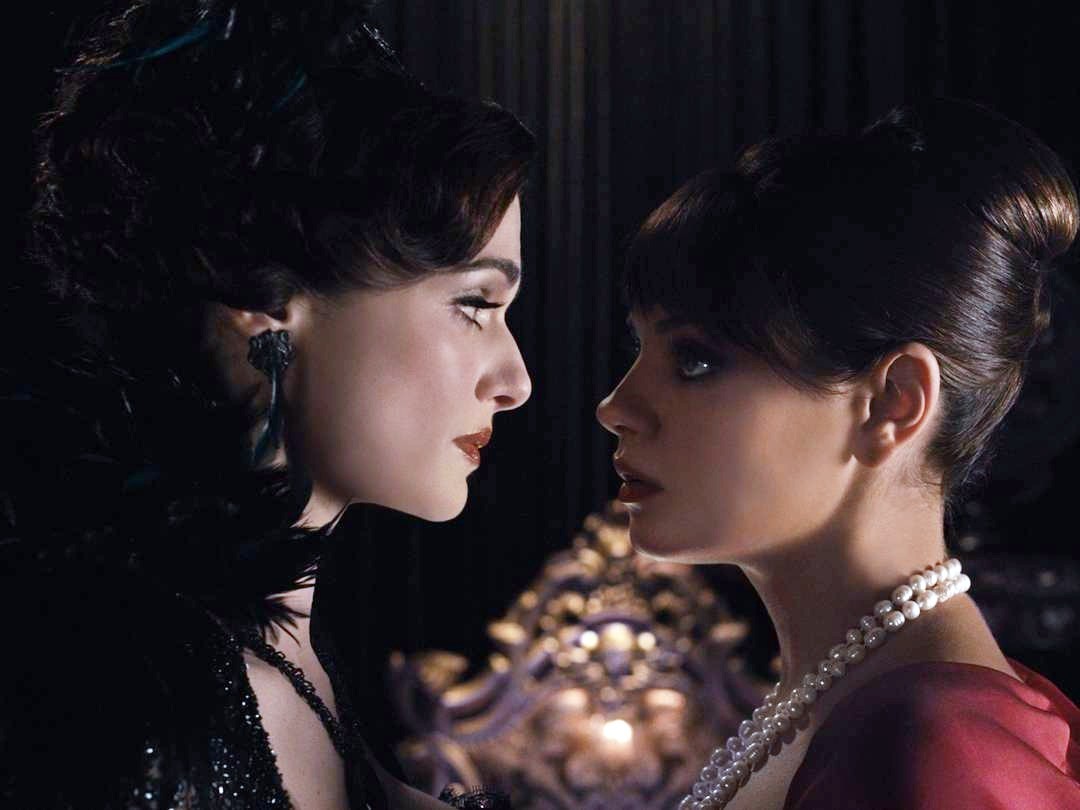
Having returned to Kansas with his travelling circus, magician Oscar Diggs (James Franco) is shown to be a fraud when he cannot heal a young girl who is unable to walk. Forced to flee on a colleague’s hot air balloon, Oscar is pulled into an approaching tornado and transported to the land of Oz.

Discovered in the wreckage by a witch named Theadora (Mila Kunis), he is informed of a prophecy that predicts the arrival of a saviour, one which she believes concerns him personally. Theadora is not the only witch in town with the prophesy in mind, however, and both Evanora (Rachel Weisz) and Glinda (Michelle Williams) have their own plans for the so-called Wizard Of Oz.

In one sense a prequel to the 1939 original, Oz The Great In The Powerful also preludes the book series that it was based on, and strives to be a stand-alone success - complete with its own franchise potential - in the process. Sam Raimi certainly has his work cut out for him, not only in terms of appeasing fans of MGM’s The Wizard Of Oz but its lawyers too. For this reason we have a brick road that charts a few hues along on the Dulux chart, a Wicked Witch without a mole on her chin, and, unfortunately, a film that never quite emulates the charm and wonder of its predecessor - whether by design or not.

With past form in the prequel department courtesy of 2011′s Rise Of The Planet Of The Apes, James Franco certainly seemed like a wise choice to front Oz The Great And The Powerful. While his decision to mug and gurn at the camera befits the atmosphere of nostalgia - working particularly well during the black and white, 4:3 opening salvo - it begins to wear a little thin once he enters Oz and his character arc finally begins. It’s less his performance than the part itself that is problematic; his persistent insistence that he isn’t the wizard Oz is looking for is just a little too reminiscent of Alice’s recent trip to Underland.

The film affords precious few opportunities for its cast to actually impress. If Franco isn’t sure of his heroic destiny, then the script is equally uncertain as to the identity of its true antagonist. At one point or another, each of Oz’s three resident witches are fingered as the true Wicked Witch of Oz, leaving Kunis, Weisz and Williams to play for ambiguity when they really need to be making the roles their own. They’re not given much to work with, the key female roles reduced to uninspiring stereotypes that have no place in the land of Oz.

It isn’t just the human characters that disappoint; the token sidekicks are hardly memorable either, with Finley the flying monkey and China Girl quickly proving to be no substitute for the Scarecrow or Tin Man, and they are never really fleshed out or developed beyond their vocal ties to the real world Oscar inhabited prior to the tornado.

It isn’t until the final act that Oz The Great And The Powerful actually starts to redeem itself, with the filmmakers’ efforts to honour the original paying due dividends. There are admittedly flashes of greatness throughout - a witch’s tears are shown to burn her cheeks, foreshadowing the Wicked Witch’s ultimate fate - but it is in these final throes that the film finds an identity of its own. Whereas Disney’s Alice In Wonderland concluded in an incongruous battle that suddenly recasts Lewis Carroll’s heroine as some sort of dragon-slayer, Disney’s Oz The Great And The Powerful actually follows through and delivers a finale that feels completely faithful to the characters and world.  The result is as bizarre as it is brilliant.

While Oz The Great And The Powerful may have one or two tricks up its sleeve, however, it is for the most part just unnecessary smoke and mirrors. Though its heart may be in the right place, the script is smart enough to homage the original and Raimi’s determination to make the flying monkeys as scary as possible shows real guts, this particular trip to Oz has very little else to offer.

Thursday, 28 February 2013

Cloud Atlas review

Cloud Atlas (15, 172 mins)
Directors: Tom Tykwer, Lana Wachowski, Andy Wachowski
★ ★ ★ ★ ★

by Steven Neish

While reading the diaries of a young American lawyer (Jim Sturgess) busy concluding business during the Californian gold-rush, amanuensis Robert Frobisher (Ben Whishaw) produces “The Cloud Atlas Sextet”, a masterpiece in part inspired by the dreams of an aging composer. After a chance meeting with Frobisher’s ex-lover in 1973 puts her up against Lloyd Hooks (Hugh Grant), journalist Luisa Rey (Halle Berry) pens a crime novel based on her investigations into his oil company, to be published 27 years later by one Timothy Cavendish (Jim Broadbent). In the future, the plight of a small rebellion and their clone saviour (Doona Bae) continues to impact the life of Zachry (Tom Hanks), 106 years after The Fall.

Written, produced and directed by the Wachowski siblings and Run Lola Run director Tom Tykwer, Cloud Atlas is one of the most expensive independent movies of all time. The film’s ambitious nature goes far beyond finding financers, however, as it attempts to translate David Mitchell’s labyrinthine, meandering and damn-near impossible novel for the big screen.

While Ang Lee has already filmed the unfilmable with Yann Martel’s Oscar-winning Life Of Pi, that story only dared to tackle such everyday concepts as life, love and faith. Cloud Atlas, on the other hand, does not stop there; split into six separate but intertwining stories, the film uses twelve actors, unprecedented prosthesis and countless characters to ruminate on everything from prejudice, bigotry and subjegation to art, fate and the very fabric of time and space.

Unlike most multi-strand stories of its ilk, there isn’t a single dud note to be found in Cloud Atlas‘ pages, leitmotif or frames. Every thread, though diverse, holds its own as each weaves in and out of the other competing and complementing narratives. Whether it’s the poignancy of one composer’s search for inspiration, the comedy of one old codger’s attempted escape from an old folks’ home, or one saviour’s plight in a dystopian future, the filmmakers build an entire universe, generation by generation, that is forever bold, believable and utterly breathtaking.

That they manage to introduce each of the six strands without immediately losing half of the audience is an incredible achievement; that they continue to develop and explore the individual stories across the remaining running time is something else entirely. Not only do the filmmakers manage to cut from story to story in a way that is fluid and meaningful, but they manage to build to simultaneous moments of overwhelming power and emotion in the process, the structure simulating the cyclical nature of its source material without ever becoming repetitive.

Even more astonishing is the work done in front of the camera. During development the decision was made to recycle the core cast across the various stories to add to the overarching sense of inter-connectivity between past, present and future. It works beautifully, as the likes of Hanks, Berry and, perhaps most surprisingly of all, Grant are able to showcase their talents, and within a single film put paid to their individual pigeonholes and typecasts. The actors, unlimited by age, race or gender, each deliver a plethora of perfectly-judged performances. Even if the make-up occasionally falters, their abilities never do.

That said, it would be easy to laugh at Cloud Atlas, and I’m sure many will. Heck, there are days - years, even - in which I’m certain I would do, too. While some of the storylines are funnier than others (intentionally, that is), there is an unabashed grandiosity and pretense that lingers throughout. When grappling with such enormous themes and while boldly pushing the boundaries of technology and belief, however, you will always run the risk of alienating audiences, and the accomplishments of Cloud Atlas are so vast that it really doesn’t matter how you react to it, just that you do react. And that you keep reacting for many years to come as the film is studied, debated and slowly unravelled.

Having now seen the film twice, I’m more convinced than ever that Cloud Atlas is something truly special. It’s a masterpiece for the ages; a master-work and borderline transcendent experience that leaves everything else released so far this year in its wake, somehow managing to tell just about every story imaginable in the space of three hours. How it wasn’t nominated for Best Film, let alone Best Adapted Screenplay or Best Make-Up is still beyond me, but then even after two viewings so too is much of the film.

Monday, 25 February 2013

Hansel and Gretel: Witch Hunters review

Hansel and Gretel: Witch Hunters (15/R, 88 mins)
Director: Tommy Wirkola
★ ★ ★ ☆ ☆

For some reason we’ve had any number of fairytale reimaginings lately, to varying degrees of success. This time around the classic Grimm story of brother and sister Hansel and Gretel gets a demented action twist added, and proves to be reasonable value for the undemanding.

We first meet Hansel and Gretel as children, when they are taken at night by their father deep into the woods, where they discover a house made of candy. Instead of falling prey to the witch inside, they destroy her, setting in motion their careers as witch hunters extraordinaire.

Many years later, as adults played by Jeremy Renner and Gemma Arterton, they're heroes who travel around the country sorting out witch problems wherever they find them. They arrive at a town where children have been going missing, soon discovering that the local witch (Famke Janssen) has been snatching them, and she’s up to no good with some mumbo-jumbo about becoming all-powerful at the blood moon.

Wisely played tongue in cheek, otherwise it would collapse under its own stupidity, Hansel and Gretel is a cheesy and passably entertaining action fantasy. It’s not really concerned with anything other than witch-fighting action, which the armed-to-the-teeth siblings engage in frequently. These scenes are frantically edited and initially quite samey, but the high level of blood and gore makes for good clean Friday night fun.

Thanks to a $50m budget, production values are high, which can help immensely with this sort of thing - there’s nothing worse than a ridiculous film that looks ugly at the same time. And the special effects are really pretty tidy, particularly a troll who comes to have quite a bearing on the story.

In the leads, Renner and Arterton display little personality, but as the only Americans in the village, their swearing and modern sensibilities in what one supposes is the 19th century offers the chance for a few nice gags.

Events proceed without much care or sense from one barney to the next, but if you’re willing to accept the utter absurdity of the setup, there are a whole lot worse examples of this brand of goofy fantasy action out there.

Wednesday, 13 February 2013

Beautiful Creatures review


Beautiful Creatures (12A/PG-13, 124 mins)
Director: Richard LaGravenese
★ ★ ★ ☆ ☆

The quest to be the next Twilight continues apace with this surprisingly intelligent but ultimately doomed teen fantasy that uses witches as its supernatural vehicle of choice. It starts like most high school dramas, with clever student Ethan standing out among his class of standard issue clichés, until the arrival of newcomer Lena, a member of the mysterious, much gossiped about Duchannes family, shakes things up and the two start to fall for each other. But the Duchannes are witches, with Lena’s uncle (Jeremy Irons) doing his best to keep Ethan away until she turns into either a good or bad witch on her 16th birthday, part of a mythology that can be rewarding but is often hokey and confused. The Deep South setting is atmospheric, though the special effects aren’t great, as it seesaws between a smart and edgy first half and a badly underwritten second, with a weak finale that comes close to derailing the lot. But what has come before, though there’s far too much of it, is sufficiently romantic and angsty to keep the target audience ticking over.

Tuesday, 11 December 2012

The Hobbit: An Unexpected Journey review

The Hobbit: An Unexpected Journey (12A/PG-13, 169 mins)
Director: Peter Jackson
★ ★ ☆ ☆ ☆

Over the Christmases of 2001, 2002 and 2003, New Zealand director Peter Jackson delivered with The Lord of the Rings a trio of rich, rewarding fantasy epics that garnered billions at the box office, 17 Oscars and left a lasting legacy as one of the greatest achievements in the history of cinema.

It was a well too deep not to return to, and after years of legal wrangling and delays that eventually saw the departure of would-be director Guillermo del Toro, Jackson returns for a new prequel trilogy. And we all remember what happened the last time someone made prequels to a beloved trilogy.

Jackson has only made two films since the trilogy closed nine years ago, King Kong and The Lovely Bones, and the fear that he’s sunk into self-indulgence (something never exactly far from the surface when it came to The Lord of the Rings, if truth be told) is confirmed here.

The final instalment of Harry Potter started an insidious trend towards splitting films adapted from popular books into as many parts as possible for maximum profits. The Hobbit, by J.R.R. Tolkien, is not a long book. And yet it’s one to which Jackson will devote around 500 minutes of screen time between now and the summer of 2014.

Though it’s a chance to reunite with some old friends, in one of the many instances of padding that stretch this first film’s ridiculous running time, we begin on the same day that The Fellowship of the Ring did; the birthday of Bilbo Baggins, a hobbit.

As Bilbo (Ian Holm) writes about his adventures that he will tell to his nephew Frodo (Elijah Wood), we also get a separate prologue about the great dwarf city of Erebor, which was devastated and then occupied by the fearsome dragon Smaug.

From there we jump back to 60 years earlier, when Bilbo was a younger hobbit, and now played by Martin Freeman. He meets the wizard Gandalf (Ian McKellen), who along with a bunch of dwarfs, descends on Bilbo’s home wanting him to join an adventure, a quest to take back Erebor from Smaug.

It’s really an awful lot of extraneous gubbins, watching 13 dwarfs turn up and eat and sing and carry on for what would be about a quarter of the running time of most normal films. Where The Lord of the Rings took its time to establish a world of richness, this is simply characters sitting about, and it’s deeply indulgent.

And for all its stunning spectacle and massive action, it was at its heart a story of friendship and overcoming adversity, and peaceful creatures showing courage in the most trying of circumstances. This deals with similar themes, and Freeman is well cast as the reluctant hero, but it’s often much too beholden to a formula.

The opening half is leisurely beyond necessity, with only the occasional raised eyebrow from McKellen to keep you going. A stop at the realm of Rivendell offers some more recapturing of past glories, as Hugo Weaving and Cate Blanchett’s elf lords return, alongside Christopher Lee’s Saruman, but it’s a brief respite from the drudgery.

And then of course there’s Gollum, the computer generated foe voiced and motion captured by Andy Serkis, who was such a highlight of the original films. His smaller part here is very welcome, and his battle of wits with Bilbo showcases the film’s strongest moments.

On the action front, Jackson has revealed his cards one too many times, and every sequence follows an identical pattern: the introduction of an enemy in the shape of an orc or a goblin or a troll, then an extended chase and battle, before a saviour appears from off-screen to rescue the situation.

But beyond the lack of involving incident, it’s also shorn of any character depth or range. Most of the dwarfs (and there are 13 of them, remember) are entirely anonymous. Those that get a bit of screen time, James Nesbitt and Ken Stott among them, offer no real lasting impression, leaving the rest to simply get lost in the mire.
Mention must be made of High Frame Rate, a process in which the film is shot and projected at 48 frames per second rather than the traditional 24. This is no mere aesthetic misstep, but a hideous error that blights the entire production, rendering the image like a 1970s TV show shot on videotape, flat and shiny and just plain odd.

On the one hand, the story and the content must be king. But there’s no escaping that the visual majesty of Jackson’s original films played a significant part in their success, and to have that diluted is a tragedy. Why spend this much money to make something that looks like an Australian soap blended with the old ITV fantasy adventure show, Knightmare?

It just adds to what is a supremely disappointing spectacle that alternates between boredom and silliness. The genuine hope has to be that Jackson was rushing towards the Christmas release date for this opener, and with a year until he unleashes Part II, let’s pray he has the time to fix his mistakes.

Wednesday, 30 May 2012

Snow White and the Huntsman review

Snow White and the Huntsman (12A/PG-13, 127 mins)
Director: Rupert Sanders
★ ★ ★ ★ ☆

The second Snow White movie of the spring transforms the fairytale into an outstanding fantasy adventure, taking a Lord of the Rings approach in action and scale, and playing it completely straight to fine effect. The basics of the story are still there, as young princess Snow White’s mother dies and her father re-marries the beautiful Ravenna (Charlize Theron). But she kills him and takes over the kingdom, imprisoning Snow and plunging the kingdom into darkness. Theron gives it everything in a fiery performance that kicks the campy Julia Roberts in Mirror Mirror into touch with a properly threatening turn, as she reveals herself to be a soul-sucking demon obsessed with being the fairest of them all. But when she discovers the grown up Snow (Kristen Stewart) is now fairest, the princess escapes and Ravenna dispatches a huntsman (Chris Hemsworth with a thick Scottish brogue) to bring her back. Where it goes from there offers rousing thrills, surprises and an unusually strong emotional core. It looks fantastic, but the sumptuousness is not just a sideshow to the story, instead creating a genuine atmosphere of darkness and oppression, particularly in a first half that’s so good, you keep waiting for it to come apart. Yet it continues to add elements of thematic richness, visual originality (which is tough in this genre) and plain old great action. The addition of the dwarfs is an ingenious touch of casting, even the sometimes dull Stewart has a spark to her, and everything is brought together with verve in one of the best films of its type in an age.

Wednesday, 9 May 2012

Dark Shadows review

Dark Shadows (12A/PG-13, 113 mins)
Director: Tim Burton
★ ☆ ☆ ☆ ☆

Dark Shadows was a daytime soap opera that ran on American television from 1966 to 1971. But it was a soap with a difference, one populated with vampires, werewolves and witches, that achieved something of a cult status.

Now Johnny Depp and director Tim Burton reteam for what feels like the 257th time to bring it to the big screen, and the hope was it wouldn’t be just another in their conveyor belt of kooky fantasies that favour lavish production design and silly accents over a well told story.

While it’s undeniable that Burton has entered the most financially lucrative period of his career (Alice in Wonderland made a stupid amount of money), it’s coincided with him churning out his most vacuous and incoherent films. And, sadly, Dark Shadows is no different.

In a prologue set in 18th century Maine that recalls Coppola’s Dracula, we learn that the Collins family moved from England to America where they became rich through their fishing empire, and built the town of Collinsport. But when Barnabas Collins (Depp) spurned the advances of a witch named Angelique (Eva Green), she cursed him to be a vampire and buried him alive.

Now, in 1972, the Collins family still live in their sprawling mansion, Collinwood, Michelle Pfeiffer and Helena Bonham Carter among them, but their stock has dwindled because Angelique now runs the fishing industry in Collinsport. Meanwhile Barnabas is accidentally exhumed, and returns to Collinwood vowing to restore the family fortune.

As has so often been the case with Burton recently, glorious production values and a moderately spooky atmosphere can only take you so far. The makeup is splendid, and Depp does one of his patented English voices, his olde speake and confusion at modern ways the only source of amusement.

But everything else about Dark Shadows is nothing like funny enough, just half-baked ideas and an arid space in between the fish-out-of-time gags, and it’s an absolute dog’s dinner when it comes to coherence and consistency. None of the sorely underdeveloped characters serve the story, flitting in and out at random, Pfeiffer in particular disappearing for long stretches only to turn up when required.

It’s quite simply a badly directed mess, with flat, lazy performances, and reversals and relationships that are pulled from out of nowhere. There’s no threat, no build up of tensions, and Angelique is the only person in the entire debacle with clear motivations and goals. At some point everyone involved just threw up their hands and decided they’d just make a gothic sketch show instead. Except, you know, without the laughs.

Absent of narrative or memorable characters, it’s a series of barely connected skits with no plot to speak of, made without a jot of care or attention, but with an eye only on how the promise of Depp and some supernatural chuckles can grab enough unsuspecting punters in before audiences start to smell what they're being shovelled. The ropey special effects are just the final nail in the coffin.

If you want to see what Depp and Burton are really capable of together, revisit Edward Scissorhands and Ed Wood. This is simply not good enough.

Tuesday, 6 March 2012

John Carter review

John Carter (12A/PG-13, 132mins)
Director: Andrew Stanton
★★☆☆☆

Originally going by the rather more evocative John Carter of Mars, Disney reportedly dropped the second part of the title of this fantasy epic in order to attract a larger, more diverse audience.

With an outlay said to be approaching $300m riding on it, they'll be desperate to secure those votes if this is going to perform at the box office more like their Alice in Wonderland than last year’s disastrous Mars Needs Moms.

On paper the right ingredients are all in place; there’s an exotic setting, fantastical beasties, lashings of digital effects and it’s all incredibly shiny, albeit dulled by the muddy brown gauze of 3D. But something is missing, something which only becomes apparent when you realise you’ve sat through two thirds of the movie and you still don’t really know what the main story is.

A prologue on Mars is first rate mumbo-jumbo, introducing rival cities who’ve been warring for centuries, with Dominic West the chief baddie squaring up against Ciaran Hinds. Hinds’ daughter must marry West in order to save the city, yet West is in possession of a weapon given to him by Mark Strong’s mysterious super-being that has the power to destroy anything in its path and which ought to render much of what follows moot.

Meanwhile, on earth, the year is 1881 and John Carter (Taylor Kitsch) is a rich explorer and ex-soldier who apparently dies suddenly, and leaves his estate to his nephew, Edgar Rice Burroughs – a nod to the man who wrote the John Carter novels on which the movie is based.

Among his possessions is a book that Edgar starts reading and which provides a flashback to 1868, and for a while this turns into a post-Civil war western, as we see John Carter seek a fortune in Apache gold.

But instead he finds a mysterious amulet and gets transported to Mars where he’s taken prisoner by a group of ten feet tall, four-armed green dudes. The gravity on Mars has given Carter the ability to leap huge distances and he impresses them with his fighting skills as part of a lengthy and lumpy setup that overdoes the subplots.

Between this and the power struggle going on between the humanoids, it’s something of a guddle that borrows from all sorts: Star Wars, Flash Gordon, Gladiator, Avatar, Sherlock Holmes and more. As a result it’s far from the most compelling mythology ever put forward in fantasy cinema, never quite managing to create a satisfying one of its own. Of course you could argue that Burroughs set the template for those films when he created the story almost a century ago, but visually there’s no getting away from John Carter’s forebears.

The central story is a largely impenetrable gobbledegook, long on exposition and light on action, at least in the first half. But in the brief bursts of swordplay and leaping about that eventually get peppered in, it’s very impressive stuff that should be leading to a big action climax that never really arrives.

It’s never boring exactly yet it never quite catches fire either, though compensating for that are some truly breathtaking sets and special effects. If as much care and attention had gone into the story then John Carter could have been a cracker, but as it stands, Disney may have to settle for modest success rather than true blockbuster status.

Friday, 8 July 2011

Harry Potter and the Deathly Hallows: Part 2 review

Harry Potter and the Deathly Hallows: Part 2 (12A, 130 mins)
Director: David Yates
★ ★ ★ ★ ★

It’s been ten years, with eight films from four directors, over six billion dollars in the bank so far, and another billion to come with this one. But the Harry Potter saga finally draws to a close, and it’s been some ride, with frequent highs (Prisoner of Azkaban, Half-Blood Prince) and only the very occasional lows.

Has it been worth the journey, the investment? This majestic final chapter proves that the answer is an unequivocal yes, and we’ve been left with an octology the likes of which cinema has never seen, and never will again.

It opens with a very swift recap of how Part 1 ended, as Voldemort (Ralph Fiennes) gets his hands on the Elder Wand, one of the three components of the Deathly Hallows that will grant him unstoppable power. But that’s your lot in terms of backstory, and if you haven’t seen every film up until this point, well then you really ought to remedy that before coming anywhere near this, because you’re going to be lost.

Following on from Part 1, Harry, Ron and Hermione (Daniel Radcliffe, Rupert Grint and Emma Watson) are still searching for the remaining Horcruxes, the objects that contain pieces of Voldemort’s soul, and destroying them is the only way to kill him.

One such is thought to be in a vault at the goblin bank, the starting point for a first rate early action sequence involving mine carts and a very angry dragon. To find the others, they need to get into Hogwarts, which is on lockdown, surrounded by Deatheaters and Dementors, with the treacherous Snape (Alan Rickman) now installed as headmaster.

All hope is almost gone, the Order of the Phoenix has been disbanded, and it’s all incredibly grey and mournful. Everyone is putting their faith and life in the hands of Harry Potter, who has grown from a frightened boy to a powerful wizard, attaining an almost messianic status in the process.

The fear was that the ball was dropped in the first part of Deathly Hallows last year, which was all talk and little forward momentum. But with all the moping out of the way in the first part, we’re left with an action extravaganza.

School’s out forever, and this is the final all-out battle between good and evil. Clashes between characters that have been a long time coming prove to be awe-inspiring, and there are consequences and copious amounts of death in a colossal adventure that simply rattles along.

And yet amid all the explosions and wand battles, somewhere in the middle we manage to find time for what will come to live in legend as the signature sequence of the entire series. Giving too much away would be grossly unfair for those who don’t know what’s coming, but just know that it involves Snape, some flashbacks and some home truths, as twists and revelations hit like hammer blows.

What we don’t get too much of is the byplay between the three young leads, but then we’ve had seven films of that and there’s very little left that needs to be said between them, though Radcliffe, Grint and Watson are still terrific. More pleasingly, the great actors who missed out in some of the previous instalments get to show what they’re really made of here, particularly Maggie Smith and the miraculous Alan Rickman.

Spending a decade and almost 20 hours of screen time with these characters has made them part of our lives, a theme that filters into the film itself. The saga has grown in depth and richness from colourful cartoons for children to parables of the bonds of friendship, family and love, until eventually it gets to a point where you realise you don’t want it to end.

And unlike Lord of the Rings, it doesn’t get bogged down in a dozen different finales that feel the need to give everyone a closing monologue. Instead there’s dignity, a quiet grace and a few tears. It’s a fitting culmination to a monumental achievement and everyone involved should feel immensely proud.