Showing posts with label Prequel. Show all posts

Wednesday, 10 December 2014

The Hobbit: The Battle of the Five Armies review

The Hobbit: The Battle of the Five Armies (12A/PG-13, 144 mins)
Director: Peter Jackson
★ ★ ★ ☆ ☆

It’s been a fair old trek to get to here, this final part of the Hobbit prequel trilogy. And, much like the experiences of its characters, it’s been a frequently exhausting and arduous journey punctuated by individual moments of relief and enjoyment.

The late decision to make three films rather than two has meant it’s often felt like you were journeying across Middle Earth in real time, and it all began to smack of cashing in. We certainly get value for money in terms of minutes in the cinema, even if this finale is a relatively brisk sub-2.5 hours, but an awful lot of that time feels like we’re treading water.

Has it been worth it in the end? Will many people plough through the six-film marathon of these plus the Lord of the Rings trilogy or will they, like now happens with Star Wars, judiciously skip the weaker entries in order to get to the good stuff?

Certainly one element where this is likely to score with fans is in the linking done to Rings. Some of it might be a bit clunky and forced, but more often than not the bridge building is both fun and evocative and likely to put a Christmas re-watch of Rings on a lot of people’s agendas.

But for now, we rejoin this poor relation directly after the end of last year’s second film, as dragon Smaug wreaks his desolation on the village of Laketown. Exposing the somewhat arbitrary stopping point of Part 2, this episode is swiftly resolved, leaving dwarf leader Thorin (Richard Armitage) in control of the mountain hall of Erebor and its enormous piles of gold.

The trouble is he’s turned mad with power, and a lot of time is spent on Thorin’s intransigence, which is threatening to be the catalyst for war, with the elves and men also ready to stake a claim to the treasure. But it’s nowhere near as compelling as the hold the One Ring had over Frodo and mostly there’s a lot of sitting about, which at least makes a change from all the walking in the first two movies.

Having really shone in the second movie, Martin Freeman is sidelined here as Bilbo becomes a minor character in his own movie. But when Bilbo does get involved, he proves the worth of Hobbits and offers a reminder of why we love them.

It’s difficult though to have any great investment in these characters beyond Bilbo and wizard Gandalf (Ian McKellen), which is a major issue. Billy Connolly turns up as a dwarf king with bizarrely computer enhanced features, to swear and stick the nut on orcs but, as ever, almost none of Bilbo’s companions stand out.

Lord of the Rings succeeded because we cared deeply about the Fellowship, but that’s sadly lacking here. It also worked because it blended real world locations with brilliantly realised visual effects; now it looks like none of it might be real at all, especially darker scenes. Just because Peter Jackson has the ability to create anything with CGI, it doesn’t mean he should. Frankly at times it looks ridiculous, and when you’ve got dwarves riding rams up mountainsides you’ve probably gone too far.

This is highlighted even more by the truly horrific High Frame Rate process, which makes proceedings look like a filmed play, shiny and inauthentic and totally lacking in filmic texture. It’s not too bad when no one has to move but most of the time it’s embarrassing, and it’s astonishing that someone thought something that looked as bad as this was acceptable to project for top dollar.

Still, Jackson is more than capable of conjuring greatness in bursts, starting with Smaug’s terrifying, fire-breathing onslaught, even if we then have to wade through the added guff and padding of the arguments among the Laketown survivors.

But the movie is called The Battle of the Five Armies, and when the men, elves, dwarfs, orcs and various sundry beasties go head to head, it really earns its corn. Pretty much the final hour is a massive ruck that impresses with its sheer scale at least, though some of the armies look a little too mathematically precise in the way they're computer generated. Things get much more involving when it splinters off into individual fights, some of which are exciting and entertaining, some of which go on forever.

In the end, if it works at all, it’s because of the world we’re in, it’s because of what Tolkien has created and it’s because Lord of the Rings exists and we know there’s so much more to see here.

No doubt Jackson cares about the product he’s delivering with this prequel trilogy, but ultimately it will probably be looked upon by audiences as an obligation rather than a necessity.

Tuesday, 20 May 2014

X-Men: Days of Future Past review

X-Men: Days of Future Past (12A/PG-13, 131 mins)
Director: Bryan Singer
★ ★ ★ ★

For those not yet tired of mutant superhero action, here then is the seventh movie set in the X-Men universe. Some have been great, some have been misfires, but the series was shaken up a couple of years ago by X-Men: First Class, which showed us younger versions of the well-worn characters as they were in the 1960s.

Days of Future Past is a sequel to that prequel, and is being sold on the fact that it brings both casts together, so we get Patrick Stewart and James McAvoy as original and young Charles Xavier, and ditto Ian McKellen and Michael Fassbender as Erik/Magneto. The one constant has been Logan aka Wolverine (Hugh Jackman), because he doesn’t age.

It begins in the future following a devastating war, where the few remaining mutants are on the run from Sentinels, massive almost unstoppable machines that are threatening to wipe them out entirely. As Stewart asks in voiceover, is this future set or can it be changed?

The X-Men believe it can be changed and so come up with a plan to send Logan (or his consciousness at any rate) back to the 1970s to stop the chain of events that led to the creation of the Sentinels. In a nutshell this means stopping Mystique (Jennifer Lawrence) from killing the scientist (Peter Dinklage) who initiates the programme.

But of course it turns out to be a lot more complicated than that, leading to difficult decisions for many of the X-Men. This is a film that’s always more interested in its characters than its action, and that has to be thanks to its director. Bryan Singer hasn’t directed any of the films since X-Men 2 in 2003, but he shows why he was the right choice to return with a guiding hand, grounding it in the choices made by its protagonists while also being in complete command of the sprawling narrative.

The set pieces aren’t just elaborate displays of special effects and action, but driven by character and plot while moving the story forward at the same time. Generally the films end up turning into the Wolverine show, which as the original trilogy and two Wolverine spin-offs have demonstrated, can get a bit dull after a while. But this is the Mystique show, and everything depends on her.

An early sequence where the lightning-fast Quicksilver helps break Magneto out of the Pentagon is gloriously inventive and thrillingly executed. And it doesn’t skimp on humour either, offering good laughs without descending into camp.

There are a couple of niggles, generally to do with plot points that might find you asking “why?” a couple of times. If you attempted to draw a line through the chronology of the previous films, you’d probably find the timeline has been a bit squiffy anyway, so as with all time travel movies it might be best to just not worry about it. And Stewart, McKellen and co in the future end up getting a bit sidelined.

But there’s real-time danger and darkness linking the future and the past, and the stakes are massive. And thanks to the numerous highpoints and an ending that could possibly be described as perfect, in most regards this is as good as superhero movies get.

Friday, 8 March 2013

Oz The Great And The Powerful review

Oz The Great And The Powerful (PG, 130 mins)
Director: Sam Raimi
★ ★ ★ ☆ ☆

by Steven Neish

Having returned to Kansas with his travelling circus, magician Oscar Diggs (James Franco) is shown to be a fraud when he cannot heal a young girl who is unable to walk. Forced to flee on a colleague’s hot air balloon, Oscar is pulled into an approaching tornado and transported to the land of Oz.

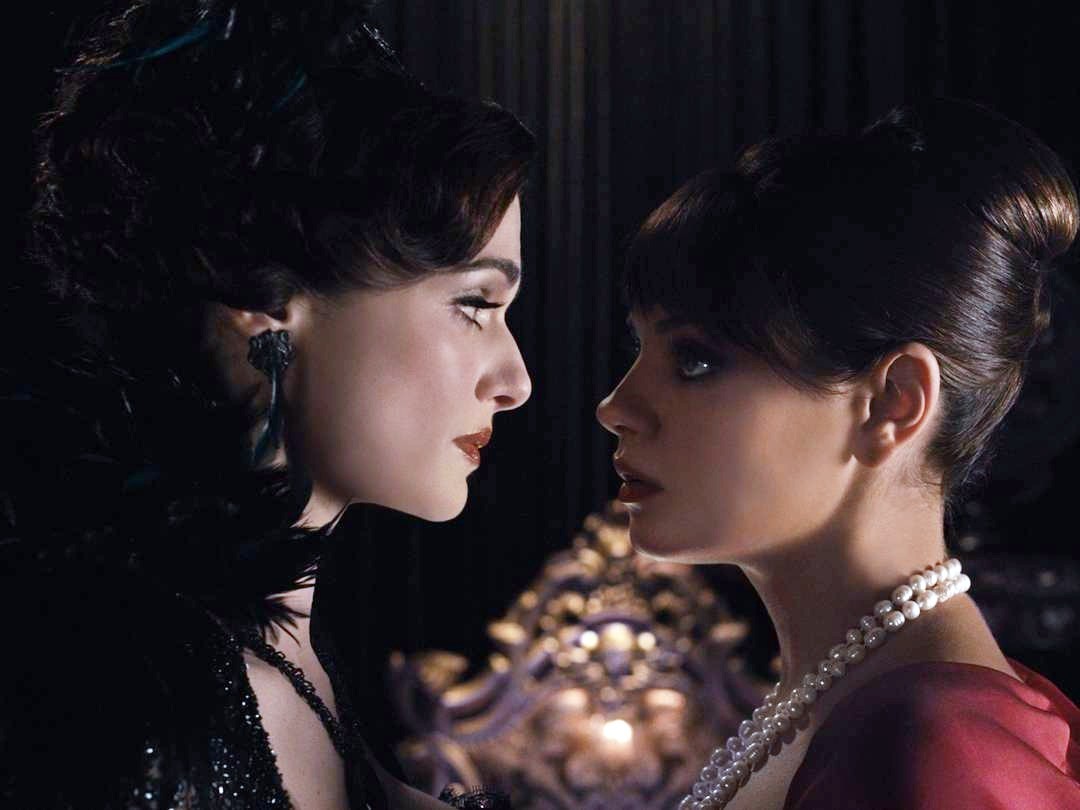
Discovered in the wreckage by a witch named Theadora (Mila Kunis), he is informed of a prophecy that predicts the arrival of a saviour, one which she believes concerns him personally. Theadora is not the only witch in town with the prophesy in mind, however, and both Evanora (Rachel Weisz) and Glinda (Michelle Williams) have their own plans for the so-called Wizard Of Oz.

In one sense a prequel to the 1939 original, Oz The Great In The Powerful also preludes the book series that it was based on, and strives to be a stand-alone success - complete with its own franchise potential - in the process. Sam Raimi certainly has his work cut out for him, not only in terms of appeasing fans of MGM’s The Wizard Of Oz but its lawyers too. For this reason we have a brick road that charts a few hues along on the Dulux chart, a Wicked Witch without a mole on her chin, and, unfortunately, a film that never quite emulates the charm and wonder of its predecessor - whether by design or not.

With past form in the prequel department courtesy of 2011′s Rise Of The Planet Of The Apes, James Franco certainly seemed like a wise choice to front Oz The Great And The Powerful. While his decision to mug and gurn at the camera befits the atmosphere of nostalgia - working particularly well during the black and white, 4:3 opening salvo - it begins to wear a little thin once he enters Oz and his character arc finally begins. It’s less his performance than the part itself that is problematic; his persistent insistence that he isn’t the wizard Oz is looking for is just a little too reminiscent of Alice’s recent trip to Underland.

The film affords precious few opportunities for its cast to actually impress. If Franco isn’t sure of his heroic destiny, then the script is equally uncertain as to the identity of its true antagonist. At one point or another, each of Oz’s three resident witches are fingered as the true Wicked Witch of Oz, leaving Kunis, Weisz and Williams to play for ambiguity when they really need to be making the roles their own. They’re not given much to work with, the key female roles reduced to uninspiring stereotypes that have no place in the land of Oz.

It isn’t just the human characters that disappoint; the token sidekicks are hardly memorable either, with Finley the flying monkey and China Girl quickly proving to be no substitute for the Scarecrow or Tin Man, and they are never really fleshed out or developed beyond their vocal ties to the real world Oscar inhabited prior to the tornado.

It isn’t until the final act that Oz The Great And The Powerful actually starts to redeem itself, with the filmmakers’ efforts to honour the original paying due dividends. There are admittedly flashes of greatness throughout - a witch’s tears are shown to burn her cheeks, foreshadowing the Wicked Witch’s ultimate fate - but it is in these final throes that the film finds an identity of its own. Whereas Disney’s Alice In Wonderland concluded in an incongruous battle that suddenly recasts Lewis Carroll’s heroine as some sort of dragon-slayer, Disney’s Oz The Great And The Powerful actually follows through and delivers a finale that feels completely faithful to the characters and world.  The result is as bizarre as it is brilliant.

While Oz The Great And The Powerful may have one or two tricks up its sleeve, however, it is for the most part just unnecessary smoke and mirrors. Though its heart may be in the right place, the script is smart enough to homage the original and Raimi’s determination to make the flying monkeys as scary as possible shows real guts, this particular trip to Oz has very little else to offer.